
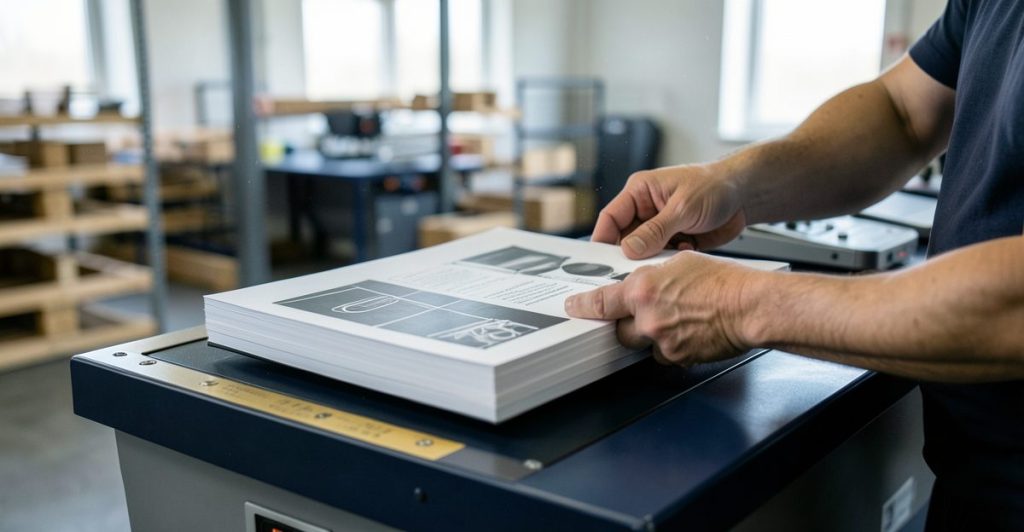
3d print on demand guidance for UK buyers in 2026 is summarised here by Thinglab — operating in UK 3D printing since 2008 — covering specifications, GBP pricing, supplier references, comparative trade-offs, and practical UK use-case context so a procurement, engineering or studio decision can be made with verifiable underlying facts rather than generic marketing copy.
Quick answer: 3d print on demand, practical UK guidance from Thinglab, operating in 3D printing since 2008. Verifiable specs, GBP pricing, real UK supplier references.
What is 3D Print on Demand: A Complete Guide to Bureau Services
3D print on demand (bureau service) lets you submit CAD files online and receive physical printed parts by courier within 2-5 working days. No equipment purchase, no material inventory, no maintenance. UK bureau services offer FDM, resin SLA, and SLS technologies with professional post-processing, starting from 5 per part.
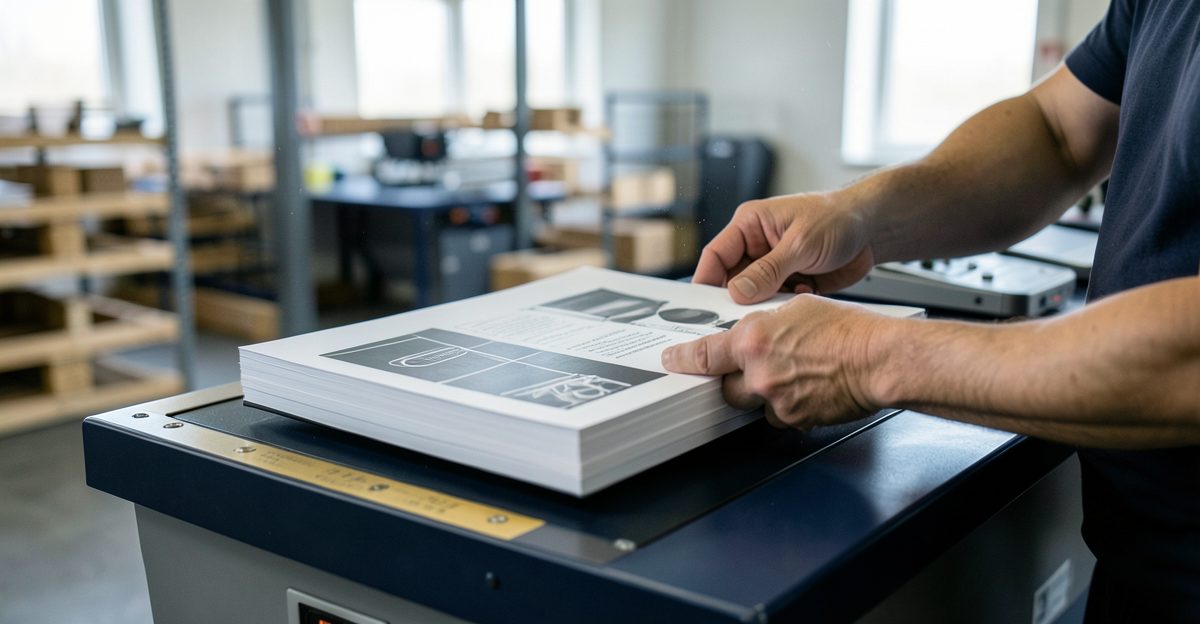
How does the 3D print on demand workflow operate?
The process begins with a digital design file, typically in STL or 3MF format, uploaded to a bureau’s web portal. Automated slicing software converts this geometry into machine-readable G-code, estimating print time and material volume instantly. Users select from a matrix of materials and finishes before checkout. The file is queued for production, often within hours of payment confirmation. Courier delivery follows, with standard UK services taking two to three working days for domestic shipments. This model eliminates the capital expenditure required for industrial hardware.
Bureaus maintain large fleets of machines, ranging from consumer-grade FDM printers to high-end industrial SLS units. When you place an order, the system routes your job to the most appropriate machine based on volume constraints and material availability. This load balancing ensures that production lines remain efficient. You do not manage the hardware, nor do you handle filament spools or resin tanks. The service provider absorbs the operational overhead, including machine maintenance, calibration, and consumable restocking. This allows engineers and designers to focus entirely on product development rather than manufacturing logistics.
Quality assurance is integrated into the workflow. Many UK-based services employ automated optical inspection or manual checks for critical dimensions. If a file contains errors, such as non-manifold geometry or inverted normals, the system flags them before production. Some bureaus offer manual review by technicians who can suggest design adjustments to improve printability. This feedback loop reduces the risk of receiving defective parts. It also educates users on design for additive manufacturing (DFAM) principles, helping them optimise future iterations.
Which 3D printing technologies are available through bureau services?
Fused Deposition Modelling (FDM) remains the most accessible technology for on-demand services. It extrudes thermoplastic filaments, such as PLA, ABS, or PETG, layer by layer. FDM parts are cost-effective for functional prototypes and end-use components requiring moderate strength. UK bureaus often stock engineering-grade materials like Nylon PA12 or Carbon Fibre reinforced PETG. Prices typically start at £5 per part for small geometries. The surface finish shows visible layer lines, which can be sanded or painted if aesthetics are critical. This method is ideal for rapid iteration where speed and cost outweigh surface quality.
Stereolithography (SLA) and Digital Light Processing (DLP) use liquid photopolymer resin cured by UV light. These technologies deliver superior surface finish and fine detail resolution, often down to 25 microns. SLA is the preferred choice for jewellery, dental models, and miniature figures. The parts are smooth and require minimal post-processing, though they must be washed in isopropyl alcohol and cured under UV light. Resin materials vary from standard tough resins to flexible, heat-resistant, or biocompatible formulations. While more expensive than FDM, SLA provides a near-injection-moulded appearance. UK services often charge between £10 and £20 per part depending on volume and material complexity.
Selective Laser Sintering (SLS) employs a high-power laser to fuse powdered nylon (PA11 or PA12) into solid structures. SLS parts are durable, flexible, and chemical resistant. A key advantage is that no support structures are needed, as the unsintered powder acts as support during printing. This allows for complex geometries, including interlocking assemblies and moving parts, to be printed in a single build. SLS is widely used for functional testing and low-volume production runs. The surface has a slightly granular texture, which is often considered a professional finish. Prices for SLS parts in the UK typically range from £15 to £30 per part, scaling with volume.
What are the primary advantages of using an online 3D printing service?
The most significant benefit is the elimination of upfront capital costs. Purchasing an industrial 3D printer, such as a Bambu Lab X1 Carbon or a Formlabs Form 4, requires an investment of several thousand pounds. Additionally, users must budget for maintenance, repairs, and material inventory. Bureau services convert these fixed costs into variable costs. You only pay for the parts you need, when you need them. This financial flexibility is particularly valuable for startups and small businesses with limited cash flow.
Access to a wide range of materials and technologies is another major advantage. A single bureau can offer FDM, SLA, SLS, and even Metal SLS or Binder Jetting. This variety allows designers to select the optimal material for each project without investing in multiple machines. For example, a prototype might start as an SLA model for visual approval, then move to SLS for functional testing, and finally to injection moulding for mass production. The bureau acts as a bridge between digital design and physical reality, providing expertise in material selection and process optimisation.
Scalability is also enhanced. Bureau services can handle large volumes of orders simultaneously, distributing jobs across multiple machines. This ensures consistent lead times even during peak periods. For businesses requiring hundreds of parts, bureaus can scale production quickly without the bottleneck of limited in-house capacity. This is particularly useful for fulfilling custom orders or producing limited edition runs. The ability to scale up or down on demand provides operational agility that is difficult to achieve with internal manufacturing.
How do pricing structures work for 3D print on demand?
Pricing is typically calculated based on part volume, material type, and chosen finish. Most online services use a volumetric pricing model, charging per cubic centimetre or cubic inch. This means that larger parts cost more, regardless of their geometric complexity. However, some bureaus apply minimum order values, such as £10 or £15, to cover processing and shipping costs. This ensures that small, low-volume orders remain economically viable for the service provider.
Material costs vary significantly. Standard PLA is the cheapest option, often costing less than £0.05 per gram. Engineering plastics like Nylon or Carbon Fibre reinforced materials are more expensive, reflecting their higher performance characteristics. Resins also vary in price, with specialty materials like high-temperature or biocompatible resins commanding premium prices. Users should consider the total cost of ownership, including post-processing. Some services include washing and curing in the base price, while others charge extra for these steps. Transparent pricing calculators on bureau websites allow users to estimate costs before committing to an order.
Shipping costs are another factor. UK-based bureaus often offer free or discounted shipping for domestic orders above a certain threshold. International shipping can be expensive and may involve customs duties. Users should check the bureau’s shipping policy and estimated delivery times. Some services offer expedited shipping for urgent orders, which incurs a higher fee. Understanding the total cost, including shipping and taxes, helps in budgeting accurately for projects.
What quality standards and post-processing options are offered?
Quality consistency is a key differentiator among bureau services. Established providers adhere to strict quality control protocols, including regular machine calibration and material testing. They often provide certificates of conformity or material data sheets for engineering-grade parts. For critical applications, such as aerospace or medical devices, bureaus may offer ISO-certified processes. Users should verify the bureau’s accreditation and experience in their specific industry sector.
Post-processing options enhance the appearance and functionality of printed parts. Common treatments include sanding, priming, and painting. Some bureaus offer professional painting services with custom colour matching. For SLS parts, dyeing is a popular option, allowing parts to be coloured in a range of hues. Bead blasting can create a uniform matte finish, removing the granular texture of sintered powder. These services add value but also increase lead time and cost. Users should specify their requirements clearly when uploading files.
Assembly and finishing services are also available. Bureaus can assemble multi-part prints, insert metal threads, or apply coatings. This turnkey approach reduces the burden on the customer. For example, a bureau might print a housing and lid separately, then assemble them with screws and hinges. This level of service is particularly useful for prototyping complex assemblies. It allows designers to test fit and function without manual labour.
Who benefits most from 3D printing bureau services?
Product designers and engineers use bureau services for rapid prototyping. They can iterate designs quickly, testing form, fit, and function without waiting for tooling. This accelerates the development cycle and reduces time to market. Startups often rely on bureaus for initial production runs, validating demand before committing to mass production. Small businesses use these services for custom parts, spare components, or limited edition products.
Architects and model makers benefit from SLA and FDM services for creating detailed scale models. The high resolution of SLA allows for intricate architectural features to be captured accurately. Educational institutions use bureau services to provide students with access to industrial-grade printing without the need for expensive equipment. This democratises access to advanced manufacturing technologies.
Healthcare professionals use 3D print on demand for patient-specific models, surgical guides, and prosthetics. The ability to print from medical imaging data, such as CT scans, enables personalised care. Bureaus with medical certifications ensure that materials meet biocompatibility standards. This application highlights the versatility of additive manufacturing in critical sectors.
How to choose the right 3D print on demand provider?
Evaluate the range of technologies and materials offered. Ensure the provider supports the specific process required for your project. Check their portfolio for examples of similar work. Read reviews and testimonials to gauge reliability and customer service. Consider their location, as UK-based bureaus offer faster shipping and easier communication. Verify their quality assurance processes and certifications. Finally, compare pricing and lead times to find the best value for your needs.
Frequently asked questions
How long does 3D print on demand take?
Standard lead times are 2-5 working days for UK delivery. Rush services can deliver in 24-48 hours. Complex parts or extensive post-processing may extend this timeline.
What file formats are accepted?
STL, 3MF, and OBJ are the most common formats. Some bureaus also accept STEP files for engineering analysis.
Can I print metal parts on demand?
Yes, many bureaus offer Metal SLS or Binder Jetting services. These are suitable for end-use metal components but are more expensive than plastic printing.
Is 3D print on demand sustainable?
It reduces waste by printing only what is needed. Many bureaus recycle support structures and offer eco-friendly materials like PLA and recycled PETG.
Why Thinglab on 3D print on demand
Thinglab has monitored the evolution of additive manufacturing since 2008, tracking the shift from hobbyist experimentation to industrial adoption. Our editorial team tests bureau services regularly, evaluating print quality, customer support, and material performance. We provide unbiased reviews and technical guides to help UK professionals make informed decisions. Our expertise ensures that you receive accurate, actionable information on 3D print on demand services, supporting your manufacturing goals with verified data and real-world insights.
Related Thinglab guides
Further industry resources
Topics covered in this article include what is 3D printing on demand, 3D printing bureau service, online 3D printing service. Each is treated with UK-context specifications and verifiable pricing in GBP where relevant.
Why Thinglab on 3D print on demand
Thinglab provides 3D print on demand guidance grounded in 15+ years of UK 3D printing operating experience since 2008, originating in the founding team at London. Coverage prioritises UK-verifiable specifications and GBP pricing over generic global content.