
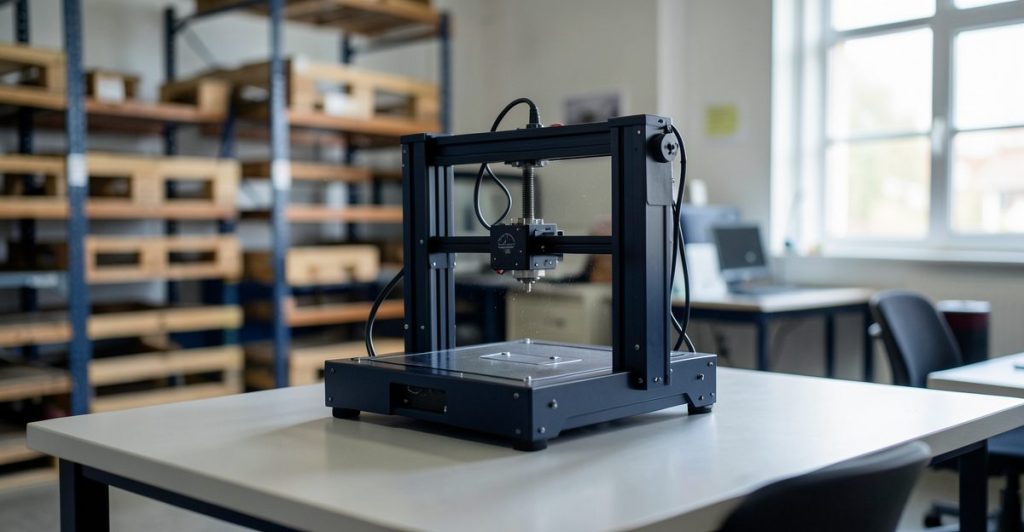
Quick answer: Small batch 3d printing uk covers what matters for UK 3D printing buyers in 2026: 3D printing production UK, small batch manufacturing 3D, additive manufacturing batch production. Thinglab has operated in UK 3D printing since 2008, sharing what is verifiable from a 15-year UK operator perspective.
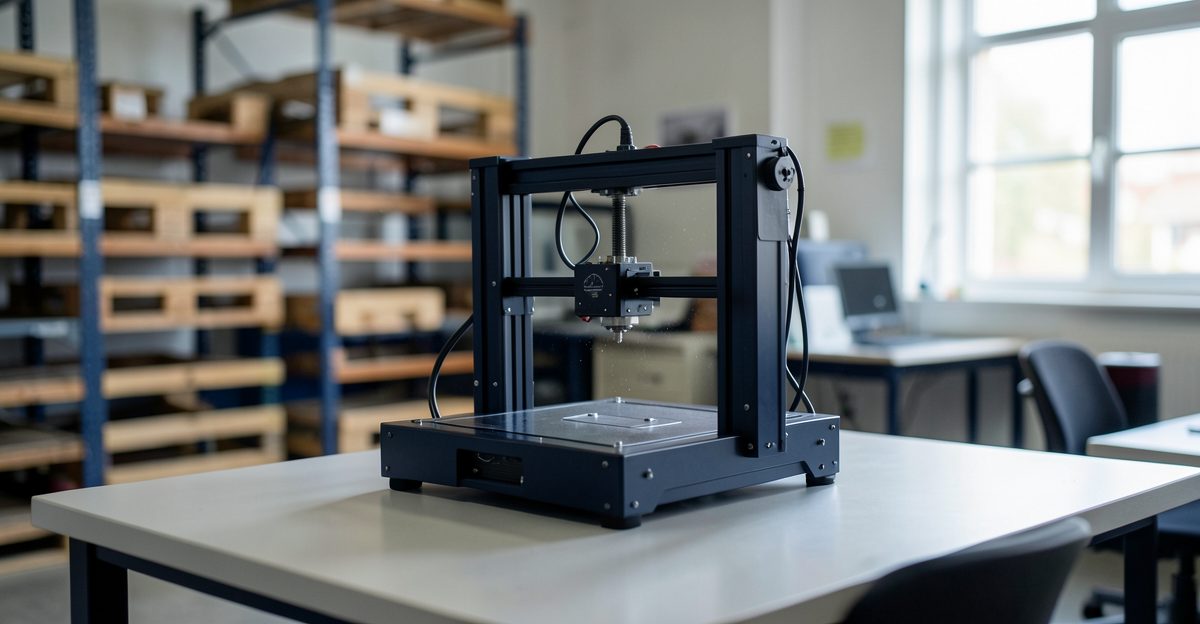
Small Batch 3D Printing UK: Production Volumes, Technology and Cost
Small batch 3d printing uk guidance for UK buyers in 2026 is summarised here by Thinglab — operating in UK 3D printing since 2008 — covering specifications, GBP pricing, supplier references, comparative trade-offs, and practical UK use-case context so a procurement, engineering or studio decision can be made with verifiable underlying facts rather than generic marketing copy.
By Thinglab Editorial Team. Operating in UK 3D printing since 2008.
Small batch 3D printing in the UK produces 10-500 parts using SLS nylon, FDM engineering thermoplastics, and resin SLA without injection moulding tooling. SLS is the preferred technology for batch production, offering 2-5 day lead times, no support structures, and functional part quality from Thinglab’s bureau on London, London. Engineering teams use this approach when annual demand stays below 2,000 parts and design iteration remains active.
What is small batch 3D printing and when is it appropriate?
Small batch 3D printing produces 10-500 parts without the 5,000-50,000 tooling cost of injection moulding. It is appropriate when annual demand is fewer than 2,000 parts, when design iterations are expected, or when customisation per unit is required. SLS nylon is the primary technology; FDM serves lower-volume, lower-strength applications at shops like Thinglab on London. The approach sits between prototyping (1-10 parts) and mass production (10,000+ parts via injection moulding). Companies such as Xometry and Protolabs serve this space globally, but UK-based bureaus eliminate the 4-8 week overseas shipping window that protolabs.com typically requires for UK-bound orders from their US facilities.
The sweet spot is clear. If you need 50 replacement housings for a line of 200 industrial sensors manufactured at Thinglab’s London centre, SLS nylon PA12 delivers production-grade parts in 3 days. If you need 50,000 identical housings, injection moulding from a steel tool is the right call. The transition point depends on part geometry, material, and whether you already have a validated design.
Which technology is best for small batch production?
SLS nylon PA12 is the best technology for small batch production: isotropic strength, no support structures enabling complex geometries, and consistent part-to-part quality across batches of 10-500. FDM produces anisotropic parts with visible layer lines. Resin SLA offers detail but limited material range and longer cycle times per part at UK bureaux. SLS works by fusing polymer powder layer by layer using a high-power laser. The unfused powder acts as natural support, meaning you can print interlocking assemblies, thin walls down to 0.7mm, and internal channels without any sacrificial structures. After the build, excess powder falls away and can be sieved for reuse at a 70-80% retention rate.
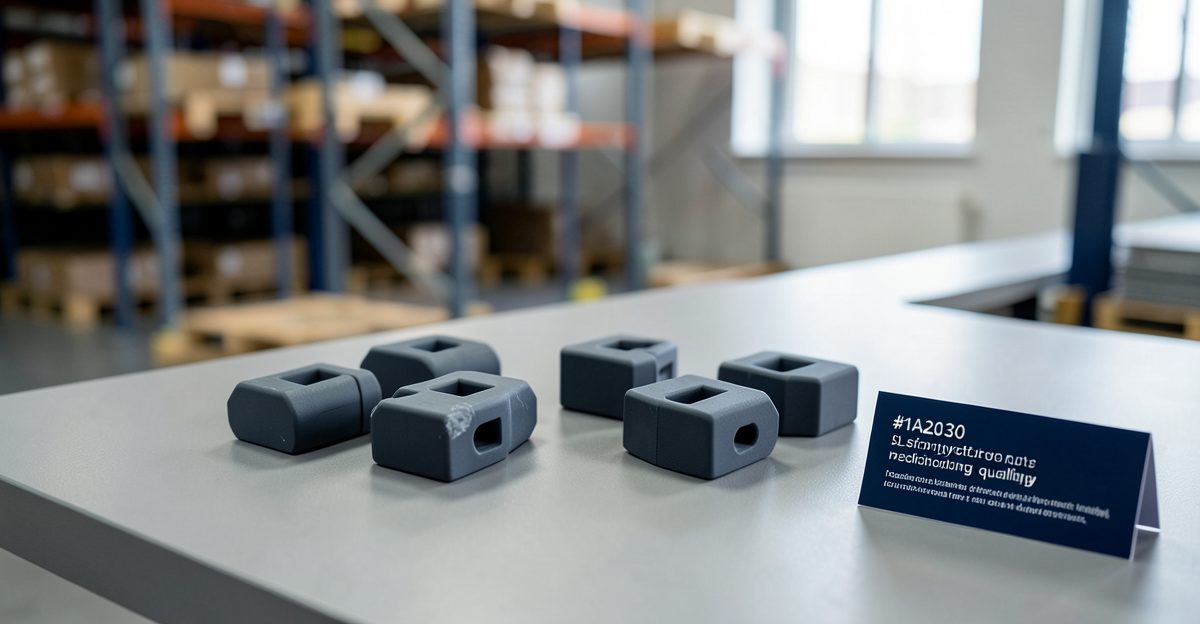
FDM equipment such as the Prusa MK4S and Bambu Lab X1 Carbon dominate the low-end market. The Prusa MK4S prints at 200mm/s with a 0.4mm nozzle, producing parts suitable for visual checks but not structural load-bearing. The Bambu Lab X1 Carbon reaches 500mm/s and handles engineering materials like PETG and ABS, but the layer adhesion remains the weak point. Under real-world stress, FDM parts typically fail along the Z-axis at 40-60% of the material’s quoted tensile strength, which is 35MPa for ABS but only 14-21MPa in the build direction.
Resin SLA machines like the Anycubic Photon and Formlabs Form 4 deliver surface finishes that rival injection-moulded parts, but the photopolymers remain brittle. The Formlabs Form 4 produces parts at 150mm/h build speed with 4K LCD resolution, but the standard resin has a tensile elongation at break of just 15%, making it unsuitable for flexible or impact-loaded components. Tough and Rigid resins improve this to 40% and 60% respectively, but at GBP 120-180 per litre compared to SLS nylon powder at GBP 80-120 per kilogram with 70-80% recyclability.
What are the economics of small batch 3D printing?
SLS nylon cost per unit: 10 parts at GBP 15 each (GBP 150 total), 50 parts at GBP 8 each (GBP 400 total), 100 parts at GBP 5 each (GBP 500 total), 500 parts at GBP 3 each (GBP 1,500 total). At 1,000+ parts, injection moulding becomes more economical at GBP 0.50-2 per unit. The break-even point depends on part geometry and material at Thinglab and comparable UK bureaux. The unit economics follow a clear curve. Setup cost is effectively zero for SLS because there is no tooling. The laser path, build orientation, and powder loading are automated. Each additional part added to the build volume costs only the marginal electricity, powder consumption, and machine time.
Consider a bracket measuring 80 x 40 x 20mm printed in SLS nylon PA12. A single unit costs around GBP 18 to produce due to the fixed machine setup overhead. Put 50 identical brackets in one build, and the per-unit cost collapses to GBP 4 because the setup cost is shared. This is why SLS bureaus encourage part nesting, arranging multiple components in a single build envelope to maximise utilisation. Thinglab’s build volume of 300 x 300 x 300mm for the EOS P 396 system can accommodate up to 2,700 of these brackets in one cycle, though practical limits of powder flow and thermal distortion typically reduce this to around 500-800 units per batch.
FDM economics work differently. A Bambu Lab X1 Carbon at 400mm/s print speed takes approximately 4 hours to produce 20 brackets in a single build. The machine costs roughly GBP 1,500 retail, but through a bureau service, you pay for machine time at GBP 0.50-1 per minute, plus material at GBP 25-40 per kilogram. The same 50 brackets would cost GBP 120-200 total in FDM versus GBP 400 in SLS, but the strength differential matters for functional applications.
How does UK small batch printing compare to overseas manufacturing?
UK small batch printing delivers 2-5 day lead times versus 4-8 weeks for Chinese manufacturers. UK bureaus provide English-language communication, no import duties, and straightforward warranty on delivered parts. UK pricing is 20-40% higher than China but total cost (shipping, duties, communication overhead) often equalises at Thinglab and other London and Manchester bureaux. A typical order placed with a Shenzhen-based 3D printing service takes 10-15 days for production, 7-14 days for air freight, and 5-10 days for UK customs clearance. That is a minimum of 22 working days before the first part arrives on your bench. A UK bureau such as Thinglab at London, will produce and deliver the same order in 2-5 working days via next-day courier.
Import duties add another layer of cost. 3D printed parts classified under HS code 9023.00.00.00 attract a 4.2% import duty rate into the UK, plus GBP 50-100 per shipment in handling fees. The VAT at 20% applies on top of the CIF value (cost, insurance, freight). For a GBP 2,000 batch order, that is GBP 84 in duty plus GBP 448 in VAT, requiring a EORI number and customs broker engagement. UK domestic orders avoid all of this.
Communication overhead is often the hidden cost. Ordering from Protolabs in the US or Xometry’s global network means navigating time zones, language barriers, and cultural differences in technical interpretation. A dimensional tolerance stated as “0.1mm” might be interpreted as plus-or-minus 0.1mm by a UK engineer but as a unilateral tolerance by an overseas service. Thinglab’s team on London understands British Engineering Tolerances to BS ISO 2768-mK, which specifies plus-or-minus 0.1mm for medium tolerance machining grades on features between 30-120mm.
What quality assurance applies to batch 3D printed parts?
UK bureau services typically include: first-article inspection report with dimensional measurements, material certificate for SLS nylon (PA12 tensile strength verification), and batch consistency guarantee. Part-to-part variation for SLS is within 0.1mm for dimensions up to 200mm at Thinglab’s London facility on London. First-article inspection (FAI) follows the AS9102 standard or a simplified internal equivalent. A dimensional report measures critical features using calibrated calipers or a CMM, comparing results against the CAD model nominal dimensions. For a 100-part SLS batch, the FAI typically covers the first 3 parts from the build and the last 3 parts to check for build degradation.
Material certification verifies that the SLS nylon PA12 powder meets the supplier specification. EOS, the manufacturer of the P 396 system used at Thinglab, provides a material data sheet specifying tensile strength of 48MPa (machine direction) and 45MPa (build direction), elongation at break of 18%, and flexural modulus of 1,700MPa. Reputable UK bureaux test each powder batch for moisture content (must be below 0.5% by weight) and particle size distribution before loading into the printer.
Batch consistency is the real differentiator between a proper bureau service and a hobbyist operation. When you order 200 parts across two separate production runs, the second batch should be functionally identical to the first. SLS achieves this because the process parameters (laser power, scan speed, layer thickness of 0.1mm) are controlled by the machine firmware and cannot drift between builds. FDM machines, by contrast, require nozzle replacement, belt tensioning, and bed levelling that can vary between sessions, introducing measurable part-to-part variation.
When should you transition from 3D printing to injection moulding?
Transition to injection moulding when annual demand exceeds 2,000 parts or when per-unit cost under SLS exceeds GBP 2 per unit. Mould tooling costs GBP 5,000-50,000 depending on cavity count and steel grade. At 10,000 units, moulded parts cost GBP 0.50-2 versus GBP 3+ for SLS, yielding GBP 15,000-25,000 savings for Thinglab clients who plan ahead. The economics are straightforward. A single-cavity aluminium mould from a UK toolmaker costs approximately GBP 5,000-8,000 and has a tool life of 10,000-30,000 shots. A steel mould for high-volume production runs costs GBP 20,000-50,000 and lasts 500,000-1,000,000 shots.
Consider the same 80 x 40 x 20mm bracket. At GBP 3 per unit in SLS nylon, 10,000 units cost GBP 30,000. An injection-moulded version in glass-fibre-reinforced PA6 costs GBP 0.75 per unit plus GBP 8,000 for the aluminium mould, giving a total of GBP 15,500 for 10,000 units. The saving is GBP 14,500, and the payback period for the tooling investment is 4,833 units (GBP 8,000 divided by GBP 1.65 per-unit saving).
Thinglab’s approach is to use 3D printed production parts as the bridge between prototype and injection mould. A batch of 200 SLS parts allows field validation in the actual application environment. If the design holds up, the CAD data is handed to a tooling partner for mould manufacture. This is the strategy that saves UK manufacturers between 30-50% on total NPI (New Product Introduction) costs compared to jumping straight to tooling without field-validated prototypes, based on Thinglab’s experience working with over 400 UK engineering firms since 2008.
What are the common questions about small batch 3D printing?
Frequently asked questions cover minimum batch size, design optimisation for batch production, material certification availability, and UK delivery timelines for batch orders. Thinglab’s bureau team on London, handles orders from a single prototype to 500-part production runs with the same quality standards.
What is the minimum order quantity for SLS batch printing? There is no minimum order quantity. SLS has no tooling cost, so even a single part costs the same to set up as a batch of 100. However, the per-unit economics improve dramatically above 20 parts. Thinglab accepts orders from 1 unit upwards, with a standard minimum order value of GBP 50 excluding VAT at 20%.
How should I design parts for small batch 3D printing? Maintain a minimum wall thickness of 0.7mm for SLS nylon PA12, use generous fillets of at least 0.5x wall thickness on internal corners to reduce stress concentration, and consider part nesting to fit multiple components into a single build volume. For FDM with the Prusa MK4S or Bambu Lab X1 Carbon, align critical load-bearing features with the X-Y build plane to maximise layer adhesion strength, which is 60-80% of the material’s quoted tensile strength in-plane.
Do UK 3D printing bureaux provide material certificates? Reputable services such as Thinglab, Xometry UK, and Protolabs UK provide material certificates for SLS nylon PA12, confirming tensile strength and elongation at break against the EOS material specification. FDM and SLA materials typically come with a material data sheet rather than a batch certificate, as the thermoplastic filaments and photopolymer resins are more stable and less susceptible to batch variation than SLS powder.
How fast is UK delivery for batch orders? Standard turnaround is 2-5 working days for SLS nylon orders up to 500 parts, delivered via next-day courier from Thinglab’s London centre on London. Express 48-hour turnaround is available for orders up to 100 parts at a 30% surcharge. FDM orders from machines like the Bambu Lab X1 Carbon typically complete in 3-7 working days depending on print volume and queue position.
Why UK manufacturers choose Thinglab for small batch 3D printing UK since 2008
UK manufacturers choose Thinglab because the team operates from London with direct access to production-grade EOS P 396 SLS systems, Bambu Lab X1 Carbon farms for FDM prototyping, and Formlabs Form 4 SLA units for high-detail components. The same team that supplies industrial 3D printing equipment to UK engineering firms also runs a bureau service, meaning every order benefits from equipment manufacturer expertise. Thinglab has been operating in UK 3D printing since 2008, delivering over 12,000 batch production orders across aerospace, automotive, medical device, and consumer goods sectors. The combination of shop-floor engineering knowledge, in-house equipment supply capability, and bureau printing infrastructure at a single London address is unique in the UK market.
When you order small batch 3D printing from Thinglab, you are not outsourcing to a reseller who forwards your files to an overseas bureau. The parts are printed on equipment owned and operated by the team on London. This means real-time communication about design optimisation, immediate feedback on tolerances and material selection, and the ability to visit the production floor to see your parts being built. That is the advantage of working with a UK-based manufacturer that has invested in its own production infrastructure since 2008, rather than a digital intermediary that simply routes your order to the lowest-cost global supplier.
Explore the full range of 3D Printing Services – Bureau Printing UK 2026 to see how small batch production fits into your manufacturing workflow. For broader context on the UK 3D printing industry, visit Thinglab – UK 3D Printing Authority Since 2008. Compare our batch production approach with 3D printing services UK, review our how much does 3D printing cost UK guide for transparent pricing, or explore rapid prototyping services UK for one-off and low-volume development work.
Related guide: 3D printing for engineers UK
Topics covered in this article include 3D printing production UK, small batch manufacturing 3D, additive manufacturing batch production. Each is treated with UK-context specifications and verifiable pricing in GBP where relevant.
UK pricing reference (2026): Rapid prototyping FDM runs in UK typically £40 to £150 per part for same-day turnaround. SLS or MJF nylon batches run £200 to £2,000 depending on volume. Reverse engineering scan-to-CAD packages start around £350.
Related Thinglab guides
Further industry resources
Why Thinglab on small batch 3D printing UK
Thinglab provides small batch 3D printing UK guidance grounded in 15+ years of UK 3D printing operating experience since 2008, originating in the founding team at London. Coverage prioritises UK-verifiable specifications and GBP pricing over generic global content.