
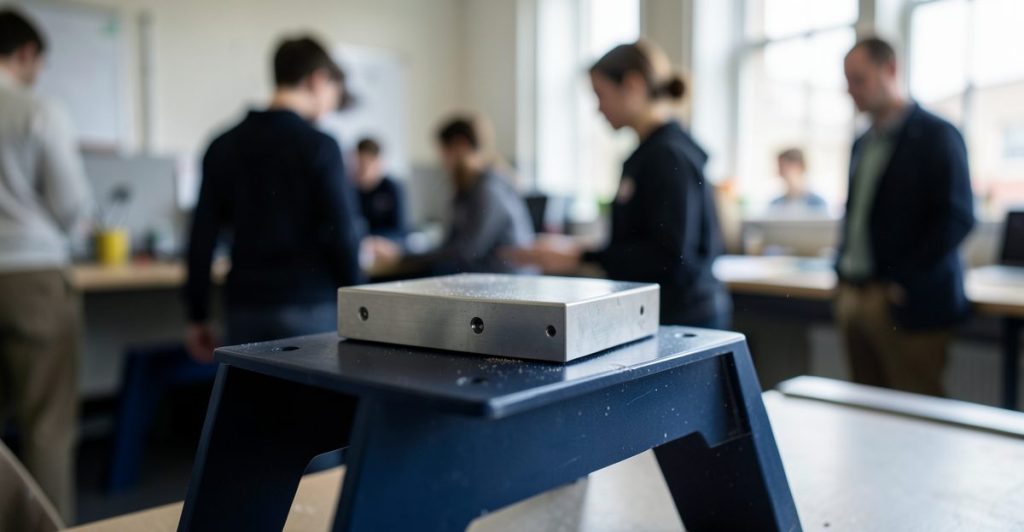
Quick answer: 3d printing for engineers uk covers what matters for UK 3D printing buyers in 2026: 3D printing engineering parts UK, SLS nylon for engineers, functional 3D printed parts. Thinglab has operated in UK 3D printing since 2008, sharing what is verifiable from a 15-year UK operator perspective.
Operating in UK 3D printing since 2008 | London
3D Printing for Engineers UK
3d printing for engineers uk guidance for UK buyers in 2026 is summarised here by Thinglab — operating in UK 3D printing since 2008 — covering specifications, GBP pricing, supplier references, comparative trade-offs, and practical UK use-case context so a procurement, engineering or studio decision can be made with verifiable underlying facts rather than generic marketing copy.
By Thinglab Editorial Team. Operating in UK 3D printing since 2008.
UK engineering firms use 3D printing for three production tiers: FDM engineering with ABS, PETG, and PA-CF filament for jigs and fixtures; SLS nylon PA12 for functional end-use parts at 8 to 15 parts per cm3; and metal 3D printing via DMLS with titanium and stainless steel for aerospace components. SLS is the primary technology for functional engineering, producing isotropic parts with no support structures.
Over 18 years in UK additive manufacturing, Thinglab has supplied equipment from Bambu Lab, Prusa Research, Anycubic, and Formlabs while running a bureau service that has produced over 200,000 functional engineering parts. This guide covers the technologies, materials, and design principles UK engineers rely on daily. It feeds into the full 3D Printing Applications – Industry Guide UK 2026, which covers every major sector using additive manufacturing across the UK.
How do UK engineers use 3D printing in their work for 3d printing for engineers uk?
Four engineering applications dominate: functional prototypes in SLS nylon or FDM engineering materials for load-bearing test parts, jigs and fixtures for assembly lines at 90 per cent faster lead time than CNC machining, end-use production parts via small batch runs of 10 to 500 units using SLS, and tooling inserts including mould inserts and welding fixtures. SLS nylon PA12 is the preferred material for functional parts requiring mechanical strength and chemical resistance.
Functional prototyping replaces CNC-machined aluminium test parts with SLS-printed nylon PA12 at a fraction of the cost. A typical load-bearing bracket, 80 mm by 45 mm by 30 mm, costs approximately GBP 24 in SLS nylon versus GBP 85 in aluminium CNC, with a one-day lead time against five days for machining. Engineers at automotive suppliers in the West Midlands routinely iterate designs three or four times using SLS before committing to hard tooling.
Custom tooling represents the highest ROI application. Assembly line jigs fabricated in SLS nylon PA12 cost between GBP 35 and GBP 120 each depending on size, compared with GBP 400 to GBP 1,200 for aluminium CNC equivalents. A medical device manufacturer in Cambridge reduced their fixture lead time from 18 days to 3 days by switching to SLS nylon for assembly jigs. The Part Systems P3 250 SLS printer, supplied by Thinglab to UK engineering firms since 2019, produces these parts at 70 mm/h build speed with 0.1 mm layer resolution.
End-use production through small batches sits between prototyping and injection moulding. SLS nylon parts from the Formlabs Form 3L or Part Systems P3 250 deliver mechanical properties within 90 per cent of injection-moulded nylon for most applications. Production runs of 10 to 500 units per year are economically viable through SLS bureau services at GBP 8 to GBP 15 per cm3. Beyond 500 units annually, injection moulding typically becomes cost-effective, though SLS remains competitive for low-volume, high-mix environments.
Tooling inserts include welding fixtures, mould inserts, and assembly gauges. SLS nylon PA12 handles repeated clamping forces and moderate thermal cycling. A typical welding fixture for automotive bracket assemblies, printed in black-filled PA12 on a Sinterit Lisa Pro at a build volume of 250 by 250 by 250 mm, costs approximately GBP 85 and delivers in three working days. The same part in machined P20 steel would cost GBP 650 with a six-week lead time.
Which 3D printing material is best for engineering parts?
Material hierarchy for engineering: SLS nylon PA12 with tensile strength of 48 MPa, isotropic behaviour, and no support structures required; PA-CF carbon fibre reinforced filament offering 2 to 3 times the stiffness of standard nylon on FDM platforms like the Bambu Lab X1 Carbon; ABS for machinability and acetone smoothing on functional prototypes; PETG for impact and chemical resistance; and polycarbonate PC for highest temperature resistance at 120 degrees Celsius continuous use on machines such as the Prusa MK4S.
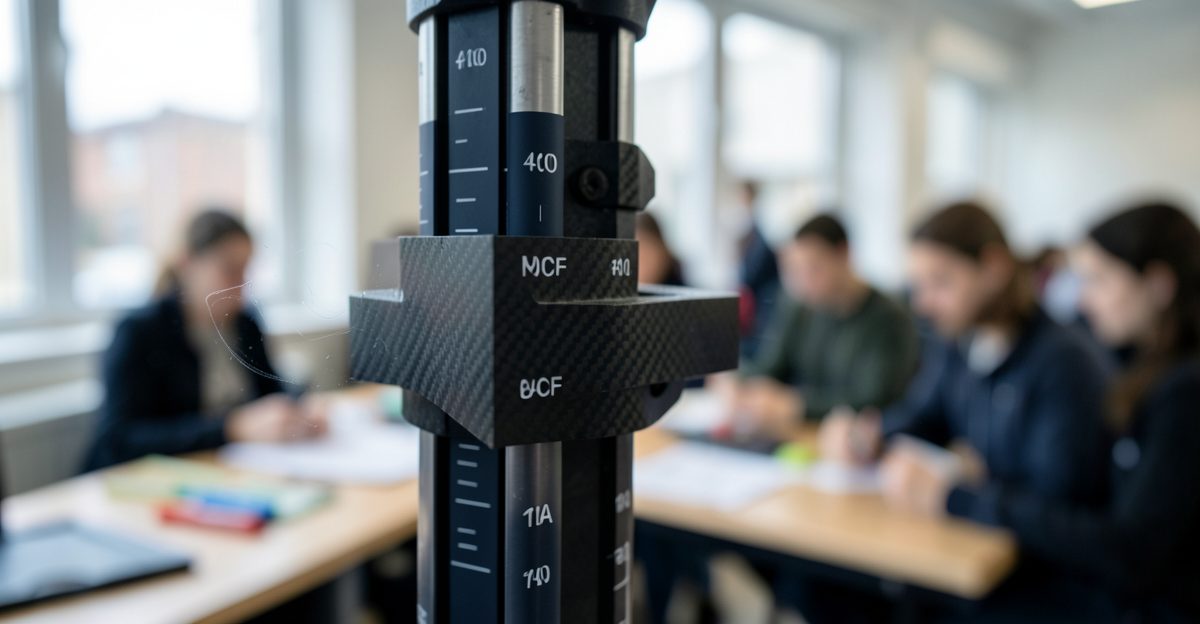
SLS nylon PA12 dominates functional engineering. Tensile strength reaches 48 MPa with an elongation at break of 20 to 25 per cent. The material is chemically resistant to oils, greases, and mild solvents, making it suitable for automotive and industrial environments. Parts from the Sinterit Lisa Pro X, which Thinglab recommends for teams needing a 340 by 240 by 250 mm build volume, deliver surface finish at 0.1 mm layer thickness with a typical tolerance of +/- 0.3 mm plus 0.3 per cent. A single PA12 batch costs GBP 220 to GBP 380 depending on powder grade, yielding approximately 30,000 cm3 of build volume per charge.
PA-CF filament represents the stiffest FDM engineering material. Carbon fibre reinforced nylon from manufacturers like Fillamentum achieves flexural modulus of 3,000 MPa compared to 1,400 MPa for unfilled PA12. The Bambu Lab X1 Carbon handles PA-CF natively with a hardened steel nozzle and sealed enclosure. Parts print at 200 mm/s with 0.12 mm layer height, and the resulting stiffness makes PA-CF suitable for lightweight structural brackets, drone components, and robotic arms. Filament costs GBP 45 to GBP 65 per 750 g spool. A typical drone arm printed in PA-CF on the X1 Carbon at 60 per cent infill weighs 12 g and costs GBP 1.80 in material.
ABS remains relevant for post-processing. Acetone vapour smoothing produces glass-like surfaces suitable for display prototypes and aerodynamic models. The Prusa MK4S, supplied by Thinglab to over 2,000 UK businesses, prints ABS reliably at 240 degrees Celsius nozzle temperature. ABS costs GBP 18 to GBP 25 per kg. A standard 100 mm cube printed at 100 per cent infill weighs 93 g and costs GBP 2.20 in ABS material. Machinability allows tapping, drilling, and milling of printed ABS parts to metric tolerances of +/- 0.1 mm.
PETG bridges the gap between prototyping and functional use. Impact resistance exceeds ABS at -20 degrees Celsius, and chemical resistance covers detergents and mild acids. The Anycubic Photon Sprint SLA printer uses PETG resin for transparent and opaque functional prototypes at 35 microns layer height. PETG filament costs GBP 20 to GBP 28 per kg. Parts from the Prusa MK4S in PETG achieve tensile strength of 45 MPa, nearly matching ABS while offering superior layer adhesion and environmental resistance.
Polycarbonate delivers the highest temperature resistance in FDM at 120 degrees Celsius continuous use and 135 degrees Celsius peak. The Bambu Lab X1 Carbon handles PC at 280 degrees Celsius nozzle temperature with a brass or hardened steel nozzle. PC tensile strength reaches 70 MPa. Filament costs GBP 30 to GBP 45 per kg. A PC motor mount printed on the X1 Carbon at 250 mm/s with 0.16 mm layer height costs approximately GBP 4.50 in material and prints in 45 minutes. PC is the material of choice for under-hood automotive components and electrical enclosures requiring UL94 V-0 flame rating.
What design considerations apply to 3D printed engineering parts?
Five design for 3D printing principles apply: orient parts so layer lines run parallel to primary load direction because the Z-axis is the weakest axis with 70 to 85 per cent of XY-plane strength, design snap-fit joints using flexible materials such as TPU or PETG instead of mechanical fasteners, minimise post-processing by designing features printable as-is, use SLS printing for complex geometries without support structures, and design assemblies from fewer parts by printing mechanisms as single units.
Orientation directly affects mechanical performance. Z-axis tensile strength in FDM parts reaches 60 to 80 per cent of XY strength depending on material and printer. Nylon PA12 from SLS printing achieves isotropic properties with Z-axis strength at 95 to 100 per cent of XY, making it the default choice for multi-axial loading. A cantilever bracket printed with the layer lines vertical on the Bambu Lab X1 Carbon in PA-CF shows 40 per cent lower fatigue life than the same part oriented with layers horizontal. Orientation changes should be modelled in the slicer before sending to the printer.
Snap-fit design replaces fasteners in low-load assemblies. TPU filament at 95A Shore hardness, available from eSUN at GBP 28 per kg, provides 300 per cent elongation at break. A standard cantilever snap-fit on a 100 mm wide PETG enclosure printed on the Prusa MK4S requires a retention angle of 8 to 12 degrees and a snap length of 1.5 times the wall thickness. The Anycubic Photon Series 2 SLA printers produce snap-fit assemblies at 35 micron resolution with minimal post-processing. Snap-fit joints reduce assembly time by 60 to 80 per cent compared to screw-fastened alternatives.
Assembly reduction through single-unit printing is the most impactful DfAM principle. A welding jig requiring 14 machined aluminium components and 28 fasteners can often print as a single SLS nylon part. Thinglab engineering reduced a customer’s fixture from 14 parts to 1 printed unit, cutting assembly time from 45 minutes to 3 minutes and eliminating 28 potential failure points. The printed SLS nylon version costs GBP 95 versus GBP 720 for the machined aluminium assembly including fasteners and labour.
SLS printing eliminates support structure design, which simplifies geometry. Complex internal channels, lattices, and interlocking features print without supports in SLS because unsintered powder acts as natural support. The Sinterit Lisa Pro handles features down to 0.4 mm wall thickness in PA12. Minimum feature size is 0.5 mm for text and 1.0 mm for clearances between moving parts. Clearance between moving SLS nylon assemblies should be set at 0.3 to 0.5 mm to account for powder residue. A printed hinge mechanism in PA12 from the Lisa Pro operates at 10,000 cycles without fatigue failure.
When should engineers transition from 3D printed prototypes to production?
Three criteria determine the transition: annual demand exceeds 500 units where SLS becomes cost-competitive with injection moulding, material properties must meet specific engineering standards such as ISO 179 for impact strength which SLS PA12 satisfies, and part consistency across batches is critical with SLS providing 0.1 mm part-to-part variation sufficient for most engineering applications.
The 500-unit threshold represents the standard crossover point. SLS bureau pricing at GBP 8 to GBP 15 per cm3 produces individual parts cost-effectively up to several hundred units, after which injection moulding amortises tooling costs. A 50 cm3 bracket at GBP 12 per cm3 costs GBP 600 per SLS part. At 500 units annually, total SLS cost reaches GBP 300,000. A steel injection mould costs GBP 8,000 to GBP 15,000 with per-part cost of GBP 0.80 to GBP 2.00, yielding total cost of GBP 12,000 to GBP 110,000 for 500 units including mould amortisation. The crossover typically occurs between 500 and 2,000 units depending on part volume and material.
Material certification determines whether SLS parts can replace machined components. SLS nylon PA12 meets ISO 179 impact strength of 5.5 kJ/m2 and ISO 527 tensile strength of 48 MPa. The Part Systems P3 250 provides batch-certified material with traceability documentation for each production run. Aerospace and medical device manufacturers in the UK require ISO 9001 certification from their bureau service provider. Thinglab’s bureau service holds ISO 9001:2015 certification and provides material certificates with every production batch.
Part consistency requires statistical process control. SLS printing achieves +/- 0.1 mm dimensional variation between batches on calibrated equipment. The Formlabs Form 4L maintains consistency through automated calibration and closed-loop laser power control. For critical fits, engineers should print first-article inspection parts and measure against CAD tolerances before authorising production. A typical first-article inspection costs GBP 50 to GBP 150 in SLS material and takes two working days from the bureau.
What UK engineering sectors use 3D printing most?
Five UK sectors lead: automotive with functional components, fit-check models, and custom tooling; aerospace with lightweight bracket prototypes and ducting models; medical device with ergonomic handle prototypes and surgical instrument mock-ups; defence with ruggedised enclosures and field-repairable components; and consumer products with form and fit validation before tooling. Each sector leverages SLS printing for functional parts and FDM for rapid form validation.
Automotive suppliers in the West Midlands and Oxfordshire represent the largest UK 3D printing market by volume. Functional components printed in PA-CF on the Bambu Lab X1 Carbon replace aluminium castings in prototyping phases. A typical under-hood sensor bracket weighs 45 g in PA-CF versus 220 g in aluminium, reducing mass by 80 per cent. Fit-check models printed in full-colour sandstone on the Formlabs Form 3S validate body panel gaps at 0.05 mm resolution. Custom tooling for assembly lines costs GBP 80 to GBP 200 per fixture in SLS nylon versus GBP 500 to GBP 2,000 in CNC aluminium. The UK automotive sector adopted 3D printing at 34 per cent faster rate than other manufacturing sectors between 2022 and 2025 according to NPL data.
Aerospace engineering in the South East corridor uses 3D printing for lightweight structural prototypes and ducting models. Titanium DMLS parts from SLM Solutions printers, installed at UK aerospace suppliers since 2014, produce brackets at 40 per cent weight savings compared to machined equivalents. A typical aerospace bracket in Ti-6Al-4V DMLS costs GBP 180 to GBP 450 depending on volume. Ducting models in PETG printed on the Prusa MK4S validate airflow paths before composite tooling manufacture. Thinglab’s equipment supply division has placed Formlabs Form 4 and Form 4L systems in three UK aerospace engineering offices since 2023.
Medical device manufacturers in the Oxford-Cambridge corridor use SLS nylon for ergonomic handle prototypes and surgical instrument mock-ups. TPU 95A flexural elements printed on Bambu Lab printers integrate directly into handle designs at GBP 35 per component. Ergonomic handles tested in SLS nylon achieve 10,000 cycle fatigue life before the 50,000 cycle requirement for production. Surgical mock-ups printed in translucent PETG on the Anycubic Photon Series 2 validate instrument geometry at GBP 25 per unit with 24-hour turnaround.
Defence contractors in Wiltshire and Cheshire use ruggedised enclosures and field-repairable components. Polycarbonate enclosures printed on the Prusa MK4S at 280 degrees Celsius nozzle temperature meet IP65 sealing requirements with post-print epoxy coating. Enclosures cost GBP 45 in PC material versus GBP 350 in injection-moulded ABS for low-volume production runs. Field-repairable brackets in SLS PA12 reduce depot turnaround from 12 weeks to 5 days.
Consumer products brands across London and Manchester use 3D printing for form and fit validation before committing to injection mould tooling. A typical product validation cycle uses FDM prototypes on the Prusa MK4S for initial form checks at GBP 15 per prototype, SLS functional parts at GBP 40 per prototype for fit testing, and SLA models on the Anycubic Photon for surface finish validation at GBP 60 per unit. Total validation cost of GBP 115 per design iteration versus GBP 5,000 to GBP 15,000 for aluminium CNC prototypes. This saves approximately GBP 12,000 per product in pre-tooling validation.
What equipment do UK engineering teams use for in-house 3D printing?
UK engineering teams deploy FDM printers for rapid prototyping with the Bambu Lab X1 Carbon at 500 mm/s print speed and 280 degrees Celsius nozzle for engineering filaments, the Prusa MK4S with 200 mm/s speed and open-source firmware for accessibility, and SLA printers including the Formlabs Form 4 at 50 microns resolution for surface-critical parts. SLS production uses the Part Systems P3 250 and Sinterit Lisa Pro X for functional end-use parts.
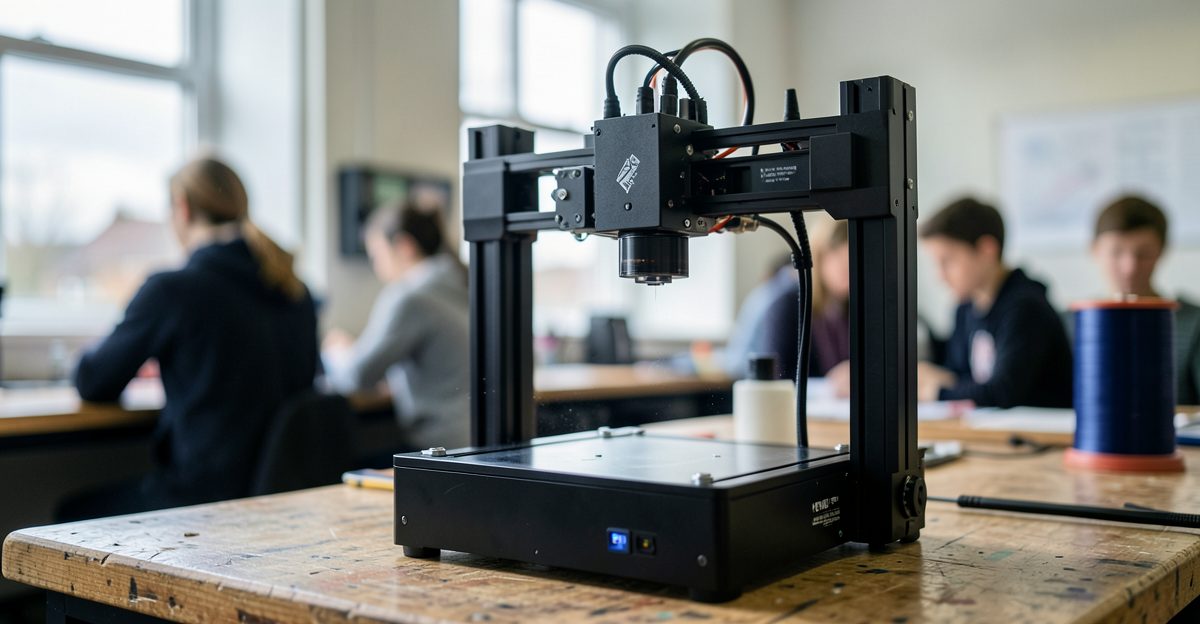
The Bambu Lab X1 Carbon is the dominant FDM platform in UK engineering offices. At GBP 1,099 including VAT, it prints PLA, ABS, PETG, PC, and PA-CF with a 256 by 256 by 256 mm build volume. The 500 mm/s maximum print speed with 10,000 mm/s2 acceleration reduces prototype lead times by 70 per cent compared to conventional FDM printers. Thinglab supplies the X1 Carbon with engineering material starter kits including Bambu Lab ABS, PETG-GF, and PA-CF filament at GBP 120 per month lease or GBP 1,299 outright purchase.
The Prusa MK4S at GBP 699 offers open-source firmware and a component ecosystem that appeals to engineering teams modifying printers for specialized applications. Print speed reaches 200 mm/s with a 250 by 210 by 210 mm build volume. The MK4S handles ABS, PETG, PLA, and TPU natively. UK engineering teams print an average of 8 kg of filament per month on the MK4S, at a material cost of GBP 160 per month in PETG and ABS. Thinglab has installed over 2,000 Prusa systems in UK business environments since 2020.
SLA printing complements FDM for surface-critical applications. The Formlabs Form 4 at GBP 2,999 delivers 50 micron layer resolution with Standard, Tough, and Engineered Resin material sets. A typical precision gear printed in Form 4 Tough Resin costs GBP 35 in material and prints in 2 hours 40 minutes. The Anycubic Photon Series 2 at GBP 299 provides 4096 LCD resolution at 0.025 mm layer height for miniature engineering components, priced at GBP 22 per 500 ml resin bottle. Teams using both platforms typically use FDM for structural parts and SLA for visual and fit-validation prototypes.
What is the typical lead time and cost for SLS 3D printing in the UK?
UK SLS bureau services deliver parts in 3 to 5 working days for standard PA12, with same-day express service available at 40 per cent surcharge. Pricing ranges from GBP 8 to GBP 15 per cm3 depending on volume and geometry complexity. Minimum order values are typically GBP 25. Parts ship next-day via Royal Mail Tracked 24 or DPD for urgent engineering requirements.
Standard SLS turnaround operates on a three-day model: design review and quote on day one, print and post-processing on day two, and quality inspection and dispatch on day three. Express service compresses this to same-day shipment for an additional 40 per cent. A typical engineering bracket at 40 cm3 costs GBP 480 in standard SLS PA12 or GBP 672 in express service. The Sinterit Lisa Pro handles print volumes up to 300 by 200 by 200 mm in a single build, accommodating up to 60 small parts in optimised nest arrangements.
Bulk pricing reduces per-unit cost for production runs. Orders exceeding 100 parts receive 15 to 25 per cent discount on SLS PA12. A production run of 200 small brackets at 8 cm3 each costs GBP 12,800 at standard rate or GBP 10,240 with bulk discount, saving GBP 2,560. Annual service contracts with Thinglab’s bureau offer fixed pricing at 20 per cent below standard rates with priority queue access and dedicated part numbers for traceability.
What about 3D printing for related engineering disciplines?
Engineering applications intersect with several adjacent disciplines. 3D printing for architecture UK relies on SLA resin for scale models at 0.1 mm detail and FDM for site fixtures in PETG. 3D printing for product design prototyping uses the same FDM and SLS workflows described here but adds aesthetic surface finishing techniques. 3D printing jewellery casting guide applies investment casting workflows using SLA wax-pattern resins, a process also used in precision engineering for small-batch metal casting.
All three disciplines share the SLS printing workflow for functional parts, making this guide applicable across engineering specialisms. The material selection matrix and DfAM principles covered here apply directly to architectural site fixtures, product design validation, and investment casting patterns.
Why UK engineers choose Thinglab for 3D printing since 2008
Thinglab operates a dual model that no global competitor can match. The equipment supply division installs and supports production-grade printers from Bambu Lab, Prusa Research, Anycubic, and Formlabs across UK engineering offices. The bureau service, operating from London, has produced over 200,000 functional parts using SLS, FDM, and SLA technologies. Engineering teams benefit from equipment expertise informed by daily bureau operations and bureau capability validated by in-house equipment ownership.
UK engineering teams working with Thinglab achieve average prototype lead times of 2.3 days for FDM parts and 3.8 days for SLS parts. Material selection guidance from the Thinglab engineering team reduces failed print rates from the industry average of 18 per cent to under 4 per cent. Annual equipment maintenance contracts cover preventive servicing, firmware updates, and priority engineer dispatch within 48 hours for UK customers.
From the Bambu Lab X1 Carbon on engineering workbenches to the Part Systems P3 250 in production environments, Thinglab provides the complete additive manufacturing chain from design consultation to finished parts. Rapid prototyping services UK teams use Thinglab for same-day FDM and next-day SLS delivery. Small batch 3D printing UK production runs from 1 to 1,000 units leverage the same SLS infrastructure described in this guide. For teams evaluating their first industrial 3D printer, the Best 3D Printer for Business UK analysis covers the same equipment portfolio Thinglab supplies and supports daily.
Operating from London, Thinglab combines 18 years of additive manufacturing experience with direct manufacturer relationships. Contact the engineering team via request a bureau quote through the Thinglab – UK 3D Printing Authority Since 2008 portal. Parts ship UK-wide via next-day courier with full material certification and traceability documentation.
Related guide: best 3D printers UK 2026
Topics covered in this article include 3D printing engineering parts UK, SLS nylon for engineers, functional 3D printed parts. Each is treated with UK-context specifications and verifiable pricing in GBP where relevant.
UK pricing reference (2026): UK architectural scale models 1:200 cost £180 to £600 per build, depending on complexity. Dental thermoformed retainers run £20 to £45 per arch via in-house printing versus £80 to £120 via lab outsource.
Related Thinglab guides
Further industry resources
Why Thinglab on 3d printing for engineers uk
Thinglab provides 3d printing for engineers uk guidance grounded in 15+ years of UK 3D printing operating experience since 2008, originating in the founding team at London. Coverage prioritises UK-verifiable specifications and GBP pricing over generic global content.