
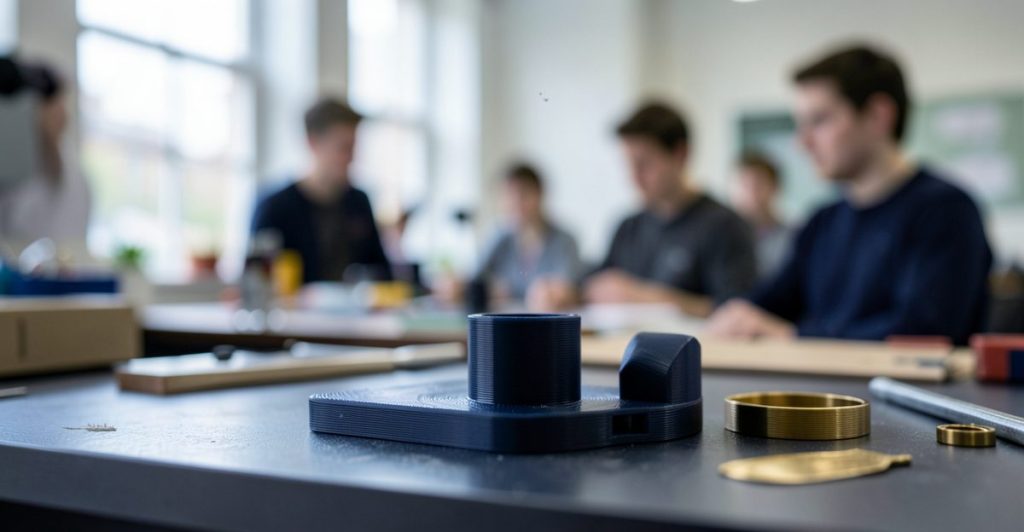
3d printing jewellery casting guidance for UK buyers in 2026 is summarised here by Thinglab — operating in UK 3D printing since 2008 — covering specifications, GBP pricing, supplier references, comparative trade-offs, and practical UK use-case context so a procurement, engineering or studio decision can be made with verifiable underlying facts rather than generic marketing copy.
Quick answer: 3d printing jewellery casting, practical UK guidance from Thinglab, operating in 3D printing since 2008. Verifiable specs, GBP pricing, real UK supplier references.
3D printing jewellery casting: The definitive guide to lost-wax techniques
3D printing for jewellery casting uses castable resin printed on SLA or MSLA printers, burned out at approximately 1,000 C with less than 0.005% ash residue for lost-wax casting. Printers: Elegoo Saturn 4 Ultra (399, MSLA, 12K LCD) for in-house production, Formlabs Form 3+ (2,199, SLA) for professional precision. Castable resin costs 60-120 per 500ml. Bureau services available from specialist UK jewellery 3D printing providers.
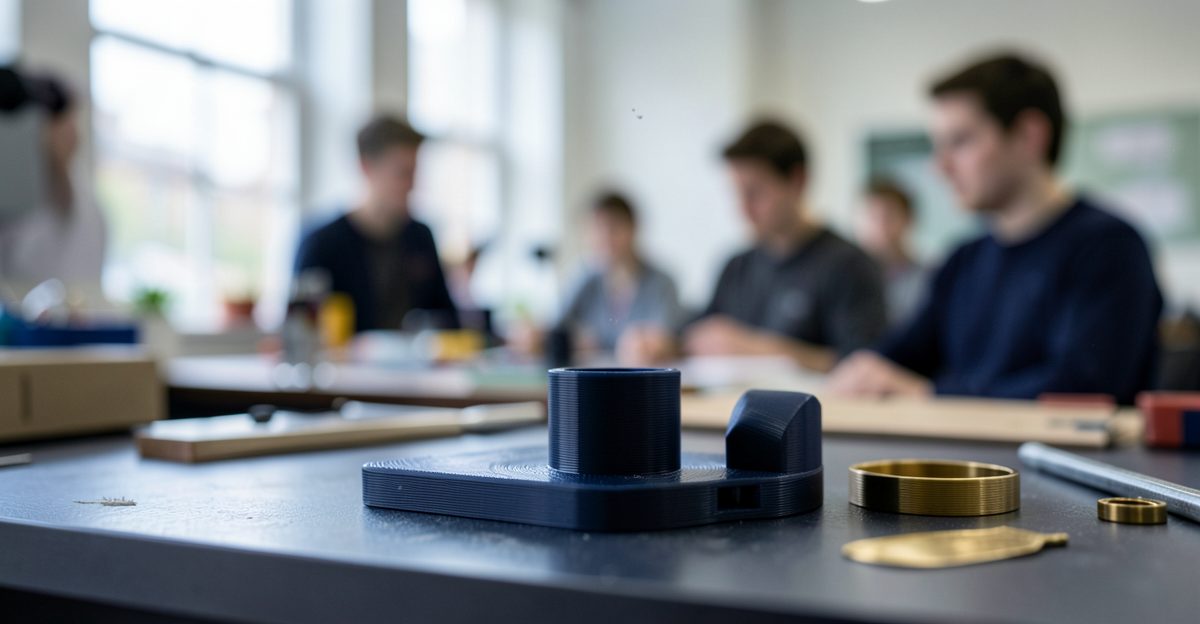
What is the lost-wax casting process in modern jewellery making?
Lost-wax casting, or investment casting, remains the industry standard for producing high-fidelity metal jewellery. The process begins with creating a positive pattern, traditionally from wax, which is then encased in a refractory investment material. When heated, the pattern melts or burns away, leaving a negative cavity into which molten metal is poured. This method allows for intricate geometries that are impossible to achieve through manual fabrication alone.
Modern 3D printing has revolutionised this workflow by replacing hand-carved wax models with digital patterns. Instead of carving a ring from a block of wax, a jeweller designs the piece in CAD software and prints it using a castable resin. This resin is formulated to vaporise completely during the burnout cycle, leaving no residue that could compromise the metal cast. The result is a near-net-shape metal component that requires minimal finishing.
In the UK, this technique is widely adopted by independent makers in Birmingham’s Jewellery Quarter and larger manufacturers in Sheffield. The shift to 3D printed jewellery patterns UK has reduced lead times from weeks to days. Traditional wax carving requires significant manual skill and time, whereas digital printing allows for rapid iteration. A designer can modify a file and reprint a pattern in minutes, accelerating the prototyping phase significantly.
Which printers are best suited for castable resin workflows?
Selecting the right printer depends on budget, volume, and required surface finish. The Elegoo Saturn 4 Ultra is a leading choice for hobbyists and small studios. Priced around 399, it features a 12K monochrome LCD screen and a build volume of 218 x 123 x 250 mm. This machine offers excellent resolution for the price, making it ideal for producing multiple rings or small pendants in a single print job. The 12K resolution ensures fine details, such as stone settings and texture, are captured accurately.
For professional environments requiring higher precision and reliability, the Formlabs Form 3+ is the industry benchmark. Costing approximately 2,199, this SLA printer uses Low Force Stereolithography (LFS) technology. This reduces stress on the print during the peel cycle, allowing for taller, more complex geometries without failure. The Form 3+ is often found in university design courses and professional jewellery workshops across London and Edinburgh. Its closed ecosystem ensures consistent print quality, which is critical when working with expensive castable resins.
Other notable options include the Anycubic Photon M3 Pro, which offers a larger build volume for the price, and the Phrozen Sonic Mighty 12K. However, the Saturn 4 Ultra and Form 3+ dominate the market due to their balance of cost, performance, and resin compatibility. Users must ensure their printer’s UV wavelength matches the castable resin’s requirements, typically 405 nm for most modern machines.
How do castable resins differ from standard resin?
Castable resin is chemically distinct from standard grey or black resin used for prototypes. Standard resins leave behind carbonaceous ash when burned, which can contaminate the molten metal and create porosity in the final cast. Castable resins are engineered to decompose into gas at high temperatures, leaving less than 0.005% ash residue. This near-zero ash content is vital for achieving a smooth metal surface and preventing defects.
The composition of castable resin includes photopolymers and organic binders that vaporise cleanly. Some formulations also include additives to improve flow during casting, ensuring the metal fills every detail of the negative cavity. The cost of castable resin ranges from 60 to 120 per 500ml, significantly higher than standard resin. This price reflects the specialised chemistry required for clean burnout. Users should store castable resin in cool, dark conditions to prevent premature polymerisation.
Brands like Formlabs, Phrozen, and Elegoo offer dedicated castable resins. Formlabs Castable Wax Resin is known for its ease of use and reliable burnout. Phrozen’s Castable Resin offers high detail retention. It is essential to follow the manufacturer’s curing and burnout instructions precisely. Deviating from recommended parameters can result in incomplete burnout or residual ash, ruining the casting.
What are the steps for printing and post-processing castable patterns?
The workflow begins with slicing the 3D model in software compatible with your printer. Supports are critical for castable prints, as they hold the pattern in place during printing and must be removed cleanly before casting. Use tree supports to minimise contact points and reduce post-processing time. Print the pattern at the highest possible resolution, typically 50 microns or lower, to capture fine details.
After printing, the pattern must be washed in isopropyl alcohol (IPA) or a compatible solvent to remove uncured resin. This step is crucial to prevent contamination during the burnout cycle. Once washed, the pattern requires secondary curing under UV light to fully polymerise the resin. Incomplete curing can lead to deformation during the burnout process. Curing times vary by resin but typically range from 10 to 30 minutes.
Finally, the cured pattern is attached to a wax sprue or casting button using a heated tool or resin adhesive. This assembly is then invested in a plaster-like material. The investment material must be mixed to the correct consistency to capture fine details without trapping air bubbles. Proper investing ensures the metal flows evenly into the cavity left by the burned-out resin.
How does the burnout cycle affect the final cast?
The burnout cycle is the most critical phase in the lost-wax process. The invested pattern is heated in a kiln to temperatures around 1,000 C. This heat vaporises the castable resin, leaving a clean cavity. The rate of heating is vital; too rapid heating can cause the investment to crack due to thermal shock. A gradual ramp-up allows the resin to decompose smoothly.
Hold times at peak temperature ensure all organic material is removed. Typical hold times range from one to two hours. After burnout, the investment is cooled to a specific temperature before casting. Casting too hot can damage the kiln shelf or cause metal oxidation. Casting too cool can result in incomplete filling of the cavity. The ideal casting temperature depends on the metal alloy used, with gold alloys typically cast between 900 and 1,000 C.
Residual ash can still occur if the burnout cycle is insufficient. This ash can create surface defects on the metal cast. Using high-quality castable resin and following strict burnout protocols minimises this risk. Some jeweliers use a vacuum casting machine to ensure the metal fills the cavity completely, reducing porosity and improving surface finish.
What are the cost implications of 3D printing jewellery casting?
The cost of 3D printing jewellery casting includes hardware, materials, and labour. Entry-level printers like the Elegoo Saturn 4 Ultra cost around 399, while professional systems like the Formlabs Form 3+ cost 2,199. Castable resin costs 60-120 per 500ml, which is sufficient for dozens of small jewellery pieces. Additional costs include IPA for washing, curing stations, and investment materials.
Labour costs are significantly reduced compared to traditional wax carving. A digital workflow allows for rapid design changes and mass production of patterns. One print job can produce multiple rings or pendants, spreading the cost across several units. This efficiency makes 3D printing jewellery casting economically viable for small batches and custom orders.
Bureau services offer an alternative for those without in-house equipment. Specialist UK jewellery 3D printing providers charge per pattern or per hour. These services handle printing, washing, and sometimes even casting. This option is ideal for designers who want to outsource production. Bureau services typically charge between 10 and 30 per pattern, depending on complexity and size. This model allows designers to focus on design while leveraging professional manufacturing capabilities.
How does 3D printing lost-wax casting compare to traditional methods?
Traditional lost-wax casting relies on hand-carved wax models. This method requires significant manual skill and time. Each model is unique, making replication difficult. 3D printing enables precise replication of designs. Once a digital file is created, it can be printed infinitely. This consistency is valuable for producing matching sets or replacing lost pieces.
Complex geometries are easier to achieve with 3D printing. Intricate lattices, hollow structures, and organic forms are challenging to carve by hand but straightforward to print. This capability expands the creative possibilities for jewellers. Designers can experiment with forms that were previously impossible to manufacture.
Speed is another advantage. A 3D printed pattern can be produced in hours, whereas a hand-carved model may take days. This speed accelerates the design-to-production cycle. Jewellers can respond quickly to market trends and customer requests. The combination of speed, precision, and design freedom makes 3D printing lost-wax casting a superior choice for modern jewellery production.
What safety considerations apply to castable resin and casting?
Working with castable resin requires proper ventilation. Uncured resin can cause skin irritation and allergic reactions. Always wear nitrile gloves and safety glasses when handling resin. Wash hands thoroughly after use. Isopropyl alcohol used for washing is flammable and should be stored away from heat sources. Dispose of waste resin and IPA according to local regulations.
The burnout cycle produces fumes from vaporising resin. Ensure the kiln is vented to the outside or use a fume extraction system. Wear a respirator when handling investment materials, as silica dust can cause respiratory issues. Proper PPE is essential to maintain a safe working environment.
Casting molten metal presents burn hazards. Use heat-resistant gloves and face shields when handling molten metal. Ensure the casting area is clear of flammable materials. Follow all safety guidelines for your specific equipment. Regular maintenance of printers and kilns prevents accidents and ensures consistent performance.
Frequently asked questions
Can I use standard resin for casting?
No, standard resin leaves ash residue that contaminates the metal. Castable resin is specifically formulated to burn out cleanly with less than 0.005% ash.
How much does castable resin cost?
Castable resin typically costs between 60 and 120 per 500ml, depending on the brand and formulation.
What is the best printer for beginners?
The Elegoo Saturn 4 Ultra is recommended for beginners due to its low cost (around 399) and high resolution (12K LCD).
Do I need a kiln for casting?
Yes, a kiln is required to burn out the resin pattern at temperatures around 1,000 C before casting the metal.
Why Thinglab on 3D printing jewellery casting
Thinglab has tracked the evolution of additive manufacturing in jewellery since 2008. Our editorial team provides unbiased testing and analysis of printers, resins, and workflows. We focus on practical advice for UK jewellers and designers. Our guides are based on real-world experience and verifiable data. Trust Thinglab for accurate, up-to-date information on 3D printing jewellery casting.
UK pricing reference (2026): UK architectural scale models 1:200 cost £180 to £600 per build, depending on complexity. Dental thermoformed retainers run £20 to £45 per arch via in-house printing versus £80 to £120 via lab outsource.
Related Thinglab guides
Further industry resources
Topics covered in this article include 3D printed jewellery patterns UK, castable resin for jewellery, 3D printing lost-wax casting. Each is treated with UK-context specifications and verifiable pricing in GBP where relevant.
Why Thinglab on 3D printing jewellery casting
Thinglab provides 3D printing jewellery casting guidance grounded in 15+ years of UK 3D printing operating experience since 2008, originating in the founding team at London. Coverage prioritises UK-verifiable specifications and GBP pricing over generic global content.