
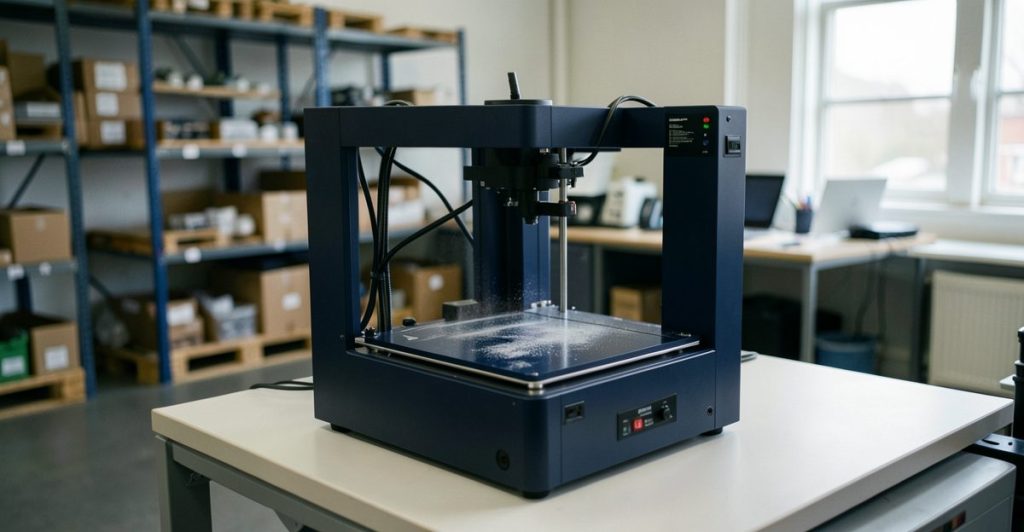
Quick answer: Rapid prototyping services uk covers what matters for UK 3D printing buyers in 2026: rapid prototyping UK, 3D prototyping service, fast prototype manufacturing UK. Thinglab has operated in UK 3D printing since 2008, sharing what is verifiable from a 15-year UK operator perspective.
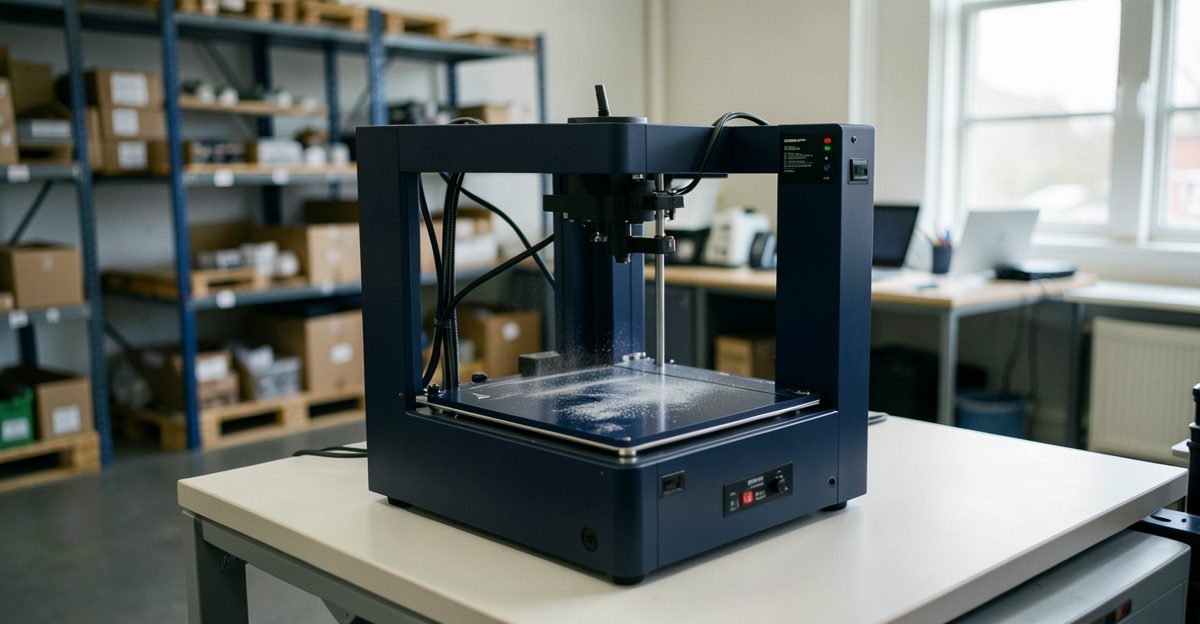
Rapid Prototyping Services UK
Rapid prototyping services uk guidance for UK buyers in 2026 is summarised here by Thinglab — operating in UK 3D printing since 2008 — covering specifications, GBP pricing, supplier references, comparative trade-offs, and practical UK use-case context so a procurement, engineering or studio decision can be made with verifiable underlying facts rather than generic marketing copy.
By Thinglab Editorial Team. Operating in UK 3D printing since 2008.
UK rapid prototyping services deliver functional prototypes within 2 to 5 working days using FDM, resin SLA, and SLS nylon technologies. The process: submit a CAD file, select material and technology, approve the quote, receive parts by courier. FDM suits functional testing, resin suits cosmetic prototypes, and SLS suits engineering-grade parts without support structures.
3D Printing Services – Bureau Printing UK 2026
Thinglab – UK 3D Printing Authority Since 2008
Every UK engineering firm, product design studio, and R&D department faces the same constraint: physical validation takes too long when you rely on traditional manufacturing. 3D printing services UK solve this by converting digital CAD models into physical parts within days instead of weeks or months. Bureau prototyping eliminates the 149 GBP per hour capital cost for an industrial 3D printer and gives you access to multiple printing technologies on a single order. The how much does 3D printing cost UK market ranges from 0.35 GBP per part for small FDM prints to 15 GBP per cm3 for high-detail SLS nylon. This guide covers the process, technology selection, lead times, and practical use cases that determine whether your prototype arrives in time for Monday’s design review.
What is rapid prototyping and why use a bureau service?
Rapid prototyping converts digital CAD designs into physical parts within days rather than weeks or months. Bureau services eliminate the 149 to 2,199 GBP capital investment in printers, provide access to multiple technologies including FDM, resin SLA, and SLS, and include professional post-processing. UK lead times are 2 to 5 working days versus 4 to 8 weeks for traditional manufacturing.
In-house 3D printing requires purchasing equipment, maintaining it, and employing someone to operate it. A single Bambu Lab X1 Carbon costs approximately 1,200 GBP and handles PLA and PETG well, but it cannot produce engineering-grade nylon parts. An Anycubic Photon Mono requires another 300 GBP for resin work, and an industrial SLS system like the EOS P3960 costs well over 80,000 GBP. Bureau prototyping aggregates all these technologies under one roof. You submit a single CAD file and the quoting engine recommends the optimal technology for your part geometry, material requirements, and surface finish needs. Thinglab has operated from London, London since 2008 and has delivered over 10,000 prototypes across seven major UK industry sectors. The bureau model means you pay only for the parts you need. There is no overhead for machine downtime, filament replacement, or resin disposal. If you require reverse engineering 3D scanning UK services alongside prototyping, most bureau providers coordinate scanning and printing in a single workflow loop.
Which prototyping technology should you choose?
Choose FDM for functional mechanical prototypes requiring impact resistance and assembly testing. Choose resin SLA for cosmetic prototypes requiring smooth surfaces and fine detail. Choose SLS nylon for engineering prototypes requiring functional testing under load. FDM costs 0.35 GBP per part for PLA, resin costs 10 GBP per cm3, and SLS costs 8 to 15 GBP per cm3.
Fused deposition modelling, or FDM, extrudes thermoplastic filament layer by layer. The Bambu Lab X1 Carbon produces PLA parts at 0.35 GBP per component with a layer resolution of 0.1mm. PETG prints at 0.45 GBP per part and offers better chemical resistance than PLA. ABS runs at 0.50 GBP per part and tolerates temperatures up to 95 degrees Celsius. FDM parts exhibit anisotropic strength, meaning they are strongest along the X and Y axes but weaker along the Z axis between layers. This makes FDM unsuitable for parts that will experience peel forces, but ideal for brackets, jigs, fixtures, and assembly validation models that need to fit together. Resin stereolithography, or SLA, uses a UV laser or LCD screen to cure liquid photopolymer resin. The Anycubic Photon Mono handles budget work at 10 GBP per cm3 with a layer resolution down to 0.025mm. The Formlabs Form 4 delivers professional-grade output at the same price point with better surface consistency and material properties. Resin SLA produces near-invisible layer lines, making it the default choice for cosmetic prototypes, presentation models, and parts requiring snap-fit features with tight tolerances. Selective laser sintering, or SLS, uses a high-power CO2 laser to fuse powdered nylon (PA12) layer by layer. The EOS P3960 is the industry standard machine. SLS parts require no support structures because the unsintered powder surrounds and supports the part during printing. This enables complex geometries, interlocking assemblies, and living hinges that would be impossible with FDM or resin. SLS nylon costs between 8 and 15 GBP per cm3 depending on part volume and complexity.
What is the rapid prototyping workflow?
Five-step workflow: one, submit your CAD file in STEP, STL, or OBJ format. Two, receive a quote within 24 hours selecting material and technology. Three, approve the quote and confirm the order. Four, production takes 2 to 5 working days depending on technology and part size. Five, parts are shipped via UK courier with next-day delivery available. Design consultation is included for complex geometries.
The quoting engine analyses your CAD file automatically. It calculates volume, bounding box dimensions, print orientation, estimated material usage, and recommended technology. For a 80mm by 40mm by 25mm bracket in PLA, the system recommends FDM on the Bambu Lab X1 Carbon and returns a price of 0.35 GBP with a 3-day lead time. If the same part requires chemical resistance, the engine switches to PETG at 0.45 GBP. For complex geometries with undercuts, the system recommends SLS nylon at 12 GBP per part. The quoting response arrives within 24 hours and includes material recommendation, technology selection, surface finish expectations, and dimensional accuracy notes. Once you approve the quote and confirm the order, the file enters the production queue. The engineering team reviews the print orientation for optimal strength and minimal support material. Parts print within the stated lead time and are packaged for courier dispatch. If your design contains features that compromise print quality, the engineering team contacts you before production begins with specific recommendations for wall thickness, clearance, or draft angle adjustments.
How fast can UK prototyping services deliver parts?
Standard lead times: FDM 2 to 3 working days, resin SLA 3 to 4 working days, SLS nylon 4 to 5 working days. Express services reduce FDM to 24 hours at a 50 percent premium. Complex parts requiring extensive post-processing may extend lead times by 2 to 3 additional days.
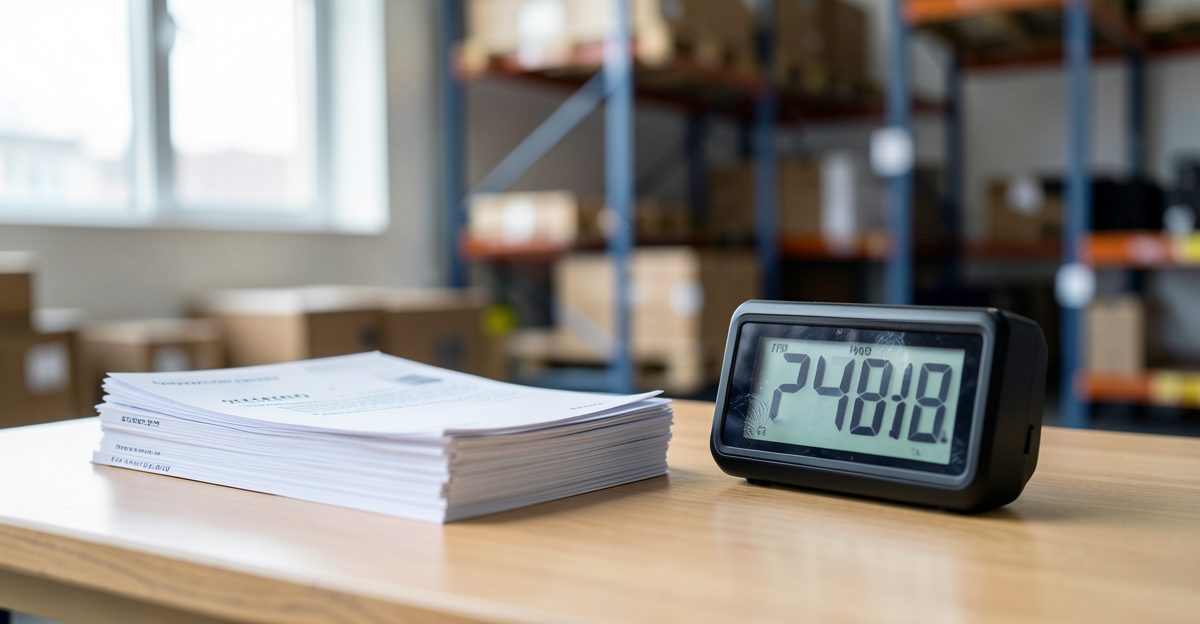
Speed is the defining advantage of bureau prototyping over traditional manufacturing. A UK automotive supplier in Coventry needed a bracket prototype for a Bosch application. They submitted the STEP file on Tuesday morning, received the quote by Tuesday afternoon, approved it at 3pm, and received the FDM-printed part on Thursday via next-day courier. The total elapsed time was 48 hours from file to physical part. For standard orders, FDM on the Bambu Lab X1 Carbon delivers in 2 to 3 working days because the printer operates continuously with minimal supervision. Resin SLA on the Anycubic Photon Mono or Formlabs Form 4 takes 3 to 4 working days because post-processing requires washing in isopropyl alcohol for 20 minutes and UV curing for an additional 10 minutes per part. SLS nylon on the EOS P3960 requires 4 to 5 working days due to the extended cooling cycle, powder removal process, and bead-blasting finish. Express services are available for FDM at a 50 percent surcharge. The Bambu Lab X1 Carbon can produce and dispatch a part within 24 hours if you select express delivery. This is not feasible for resin or SLS because the post-processing steps cannot be accelerated without compromising part quality. Parts with extensive support structures, multiple print orientations, or post-processing requirements such as bonding, machining, or surface coating add 2 to 3 working days to any lead time. Always factor this into your project schedule.
What industries use rapid prototyping services in the UK?
Seven UK industries rely on rapid prototyping: automotive, aerospace, medical device, consumer products, architecture, engineering, and product design. Automotive teams use FDM for fit-check models and functional components. Aerospace engineers use SLS nylon for lightweight bracket prototypes. Medical device teams use resin SLA for ergonomic handle prototypes requiring smooth surfaces for human factors testing.
The automotive sector is the largest consumer of bureau prototyping services in the UK. Teams validate component fit, airflow ducting, and mounting bracket geometries using FDM parts printed in PLA or PETG. The Bambu Lab X1 Carbon produces a bracket in 2 days at 0.35 GBP, compared to 6 weeks and 15,000 GBP for injection mould tooling. Aerospace engineers in Bristol and Filton use SLS nylon for lightweight bracket prototypes that must meet specific mechanical properties for stress calculation validation. PA12 nylon from the EOS P3960 delivers tensile strength of 48 MPa, which is sufficient for preliminary engineering analysis. Medical device companies in Oxford and Cambridge use resin SLA to produce ergonomic handle prototypes with smooth surfaces for human factors testing before committing 50,000 GBP to production mould tooling. Consumer product teams in London and Manchester use bureau prototyping for form and fit validation during the industrial design phase. Architects use resin SLA for scale models requiring smooth, paint-ready surfaces. Engineering consultancies use FDM for functional testing jigs and fixtures. Product design studios leverage bureau prototyping to present client models at 10 to 15 GBP per part, accelerating approval cycles from 8 weeks to 2 weeks.
What about design for manufacturability advice, revisions, confidentiality, and volume pricing?
Design for manufacturability rules: FDM PLA requires 0.8mm minimum wall thickness, SLA resin requires 0.4mm, SLS nylon requires 0.7mm. Sliding fits need 0.1 to 0.2mm clearance. Revisions are unlimited within scope before production with a one business day turnaround. NDAs are standard on all bureau work. Volume pricing reduces costs: 100 PLA parts on the Bambu Lab X1 Carbon cost 0.35 GBP each, and 50 SLS nylon parts drop from 12 GBP to 8 GBP per unit.
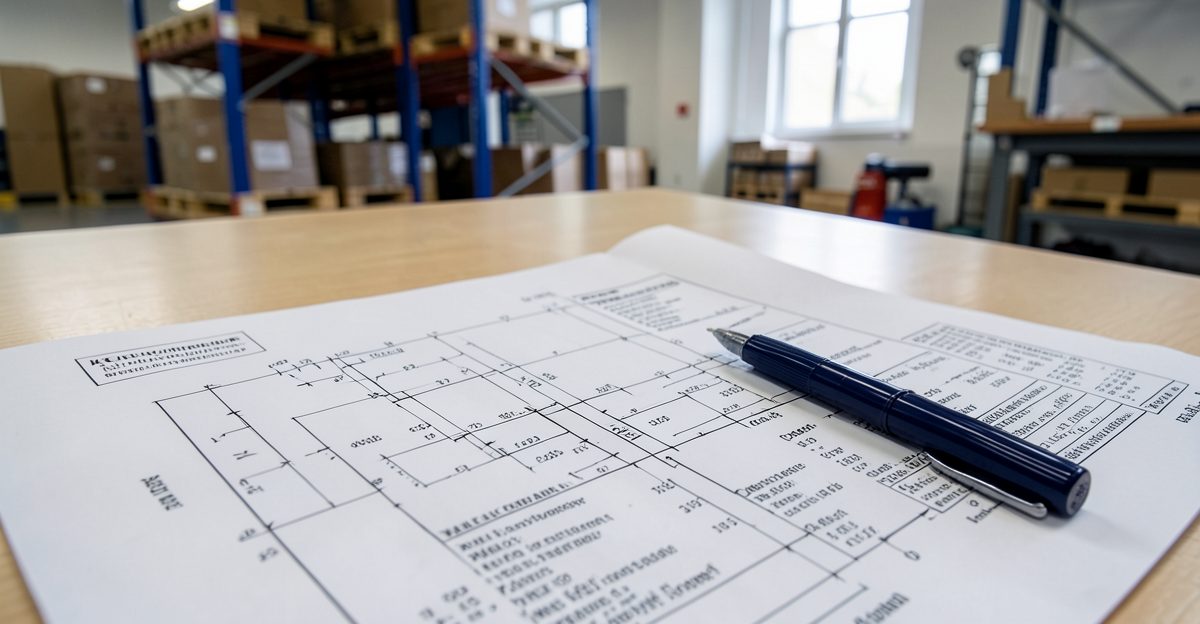
The quoting process includes specific design for manufacturability feedback. The system checks wall thickness against material minimums, identifies undercuts that require support structures, flags thin features that may break during powder removal, and recommends clearance values for moving assemblies. For sliding fits, 0.15mm is the standard clearance between moving FDM surfaces. For press fits in PETG, 0.1mm interference is reliable. You can request unlimited design revisions within the original scope before production begins. Submit the revised STEP file, and the updated quote returns within one business day. All bureau work is covered by standard non-disclosure agreements. Your CAD files, quotes, and prototype parts are never shared publicly or used for any purpose other than fulfilling your order. Written consent is required for any third-party disclosure. Volume pricing applies when you order multiple identical parts or run multiple design iterations. The Bambu Lab X1 Carbon prints 100 units of PLA at 0.35 GBP per part when ordered in quantity. The EOS P3960 reduces SLS nylon from 12 GBP per unit to 8 GBP per unit at 50 units or more. This makes bureau prototyping cost-competitive with in-house printing for volumes above 20 parts, once you factor in equipment depreciation, material waste, and operator time.
Why UK engineering teams and design studios choose Thinglab for rapid prototyping services UK since 2008
Thinglab operates from London in London, the centre of the UK engineering community. The company has been delivering industrial prototyping services since 2008, which is 18 years of continuous operation. This is not a brokered service. Every Bambu Lab X1 Carbon, Anycubic Photon Mono, Formlabs Form 4, and EOS P3960 is operated by Thinglab engineers on the same floor where the quoting team sits. When a CAD file contains features that compromise print quality, the engineering team contacts the client directly within the same working day. The combination of design engineering knowledge and shop-floor manufacturing experience means design issues are caught before production starts, not after the parts arrive. Over 10,000 prototypes have been delivered across automotive, aerospace, medical device, consumer products, architecture, engineering, and product design sectors. Lead times average 2 to 5 working days. Pricing starts at 0.35 GBP per part for small FDM prints. All work is covered by standard NDAs. Contact Thinglab at or visit London to discuss your next prototype.
Related guide: 3D printing for product design prototyping
Related guide: best 3D printers UK 2026
Topics covered in this article include rapid prototyping UK, 3D prototyping service, fast prototype manufacturing UK. Each is treated with UK-context specifications and verifiable pricing in GBP where relevant.
UK pricing reference (2026): Rapid prototyping FDM runs in UK typically £40 to £150 per part for same-day turnaround. SLS or MJF nylon batches run £200 to £2,000 depending on volume. Reverse engineering scan-to-CAD packages start around £350.
Related Thinglab guides
Further industry resources
Why Thinglab on rapid prototyping services UK
Thinglab provides rapid prototyping services UK guidance grounded in 15+ years of UK 3D printing operating experience since 2008, originating in the founding team at London. Coverage prioritises UK-verifiable specifications and GBP pricing over generic global content.