
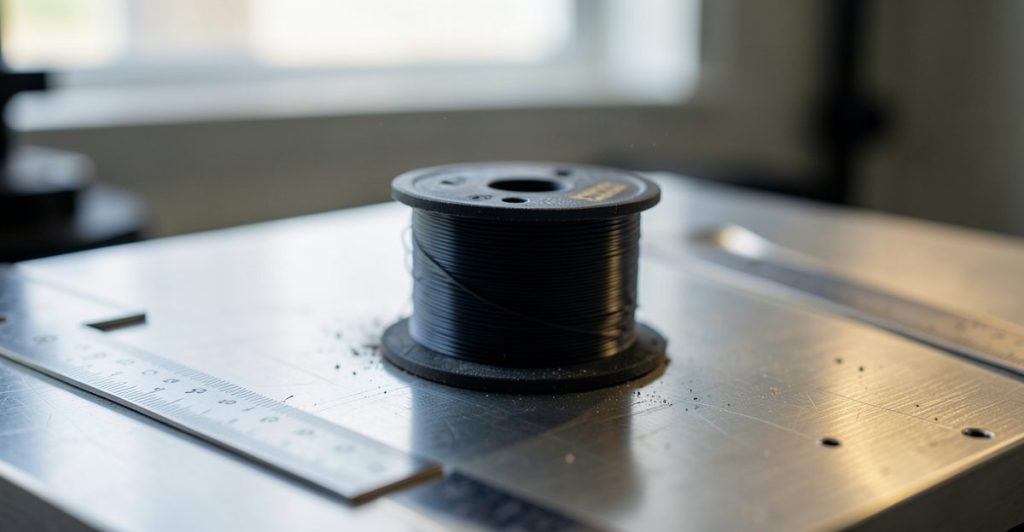
Abs filament 3d printing guidance for UK buyers in 2026 is summarised here by Thinglab — operating in UK 3D printing since 2008 — covering specifications, GBP pricing, supplier references, comparative trade-offs, and practical UK use-case context so a procurement, engineering or studio decision can be made with verifiable underlying facts rather than generic marketing copy.
Quick answer: Abs filament 3d printing, practical UK guidance from Thinglab, operating in 3D printing since 2008. Verifiable specs, GBP pricing, real UK supplier references.
What is ABS Filament 3D Printing: A Complete Guide
ABS (Acrylonitrile Butadiene Styrene) is a thermoplastic filament for 3D printing that prints at 230-260 C with a 100-120 C bed temperature. It is heat resistant, durable, and machinable, but suffers from high warping and requires an enclosed printer. Price in the UK is 15-25 per kg.
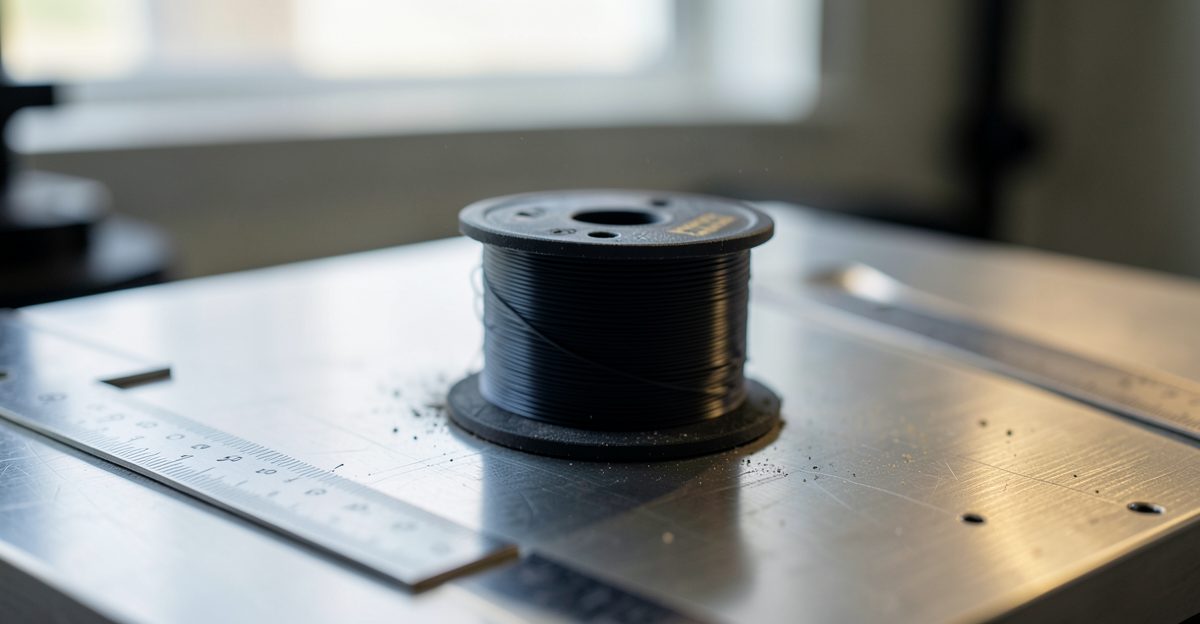
What is ABS plastic and why is it used in 3D printing?
ABS is a petroleum-based thermoplastic polymer known for its toughness and impact resistance. It was one of the first materials widely adopted for fused deposition modelling (FDM) due to its balance of strength and cost. Unlike brittle plastics, ABS contains butadiene rubber particles that absorb shock, making it ideal for functional prototypes and end-use parts. This composition gives it a higher melting point than PLA, allowing it to withstand temperatures up to 90 C before deforming. Manufacturers use it for everything from LEGO bricks to automotive interior components because it maintains structural integrity under stress. In the UK, industrial ABS is often sourced from suppliers like BASF or SABIC, ensuring consistent chemical properties across batches. The material’s ability to be chemically smoothed with acetone vapour further extends its utility for professional applications where surface finish matters.
What are the optimal ABS printing temperatures?
Successful ABS printing requires precise thermal management, starting with an extruder temperature between 230 and 260 C. Most standard ABS filaments print best around 240 C, but this varies by manufacturer. For example, eSun ABS+ may perform well at 235 C, while generic brands might need 250 C to flow correctly. The bed temperature is equally critical, needing to stay between 100 and 120 C to prevent the first layer from cooling too quickly. A heated bed set to 110 C provides the necessary thermal mass to keep the print anchored. Using a brim or raft is often necessary to combat the strong adhesive forces that pull corners upward. Many UK-based makers use a BuildTak sheet or PEI plate with a layer of glue stick to ensure reliable adhesion during the initial heating phase.
How does ABS compare to PLA in terms of performance?
ABS vs PLA is the most common comparison for beginners, but they serve different purposes. PLA is easier to print with, requiring no enclosure and lower temperatures, but it becomes soft at just 60 C. ABS, by contrast, handles heat much better and is less likely to warp under its own weight during long prints. However, ABS emits strong fumes during printing, including styrene, which requires good ventilation or an enclosed printer with filtration. PLA is biodegradable and odourless, making it suitable for schools and home offices, whereas ABS is better suited for workshops with proper extraction systems. In terms of mechanical properties, ABS is more ductile and can bend without breaking, while PLA is stiff and brittle. For functional parts that will see mechanical load or heat, ABS remains the superior choice despite its printing challenges.
Why is an enclosed printer recommended for ABS?
Warping is the primary enemy of ABS printing, caused by rapid cooling and contraction of the plastic as it solidifies. An enclosed printer maintains a stable ambient temperature around the print, reducing the thermal gradient between the hot extruded filament and the surrounding air. This stability prevents the layers from pulling apart at the corners, a phenomenon known as delamination. Printers like the Bambu Lab X1 Carbon or the Prusa MK4S with an enclosure kit provide the consistent environment needed for large ABS prints. Without an enclosure, even a draft from an open window or air conditioning can cause a print to fail. In the UK, where indoor temperatures can fluctuate, an enclosure acts as a thermal buffer, ensuring that the bed and chamber remain at the required 100 C+ throughout the print cycle.
How do you prevent warping and cracking in ABS prints?
Preventing warping involves a combination of hardware and software strategies. First, ensure your bed is perfectly level and clean. Using a glue stick or hairspray on the build surface increases adhesion significantly. Second, design your models with chamfered corners instead of sharp 90-degree angles to reduce stress concentration. Third, use a brim in your slicer settings to increase the footprint of the first layer. A brim of 5-10 mm is usually sufficient to anchor the print. Additionally, reducing the print speed for the first few layers helps the material bond better to the bed. Some users also employ a heated chamber, which keeps the entire print warm for longer, allowing stresses to relax gradually. For large prints, slowing down the cooling fans or turning them off entirely can also mitigate cracking.
What are the safety considerations for printing with ABS?
Printing with ABS releases ultrafine particles (UFPs) and volatile organic compounds (VOCs), including styrene, which can be harmful if inhaled in high concentrations. Styrene has a distinct sweet smell, but this does not mean it is safe. Long-term exposure can cause respiratory irritation and other health issues. Therefore, it is essential to print ABS in a well-ventilated area or use an enclosed printer with a HEPA and carbon filter. The Bambu Lab X1 Carbon, for instance, includes a filtration system that captures most particles and odours. If you do not have an enclosed printer, consider printing in a separate room with an air purifier. Never print ABS in a bedroom or living space where people spend extended periods. Proper ventilation is not just a preference; it is a health requirement for serious 3D printing enthusiasts.
How can you post-process ABS for a professional finish?
One of the unique advantages of ABS is its compatibility with acetone smoothing. Acetone dissolves the outer layer of ABS, causing the layer lines to disappear and creating a glossy, glass-like surface. This process, known as acetone vapour smoothing, is widely used in industrial prototyping. To do this safely, you need a sealed container, acetone, and a way to suspend the print above the liquid. The vapour will gently melt the surface, removing imperfections. This technique is not possible with PLA, which is resistant to acetone. After smoothing, the part can be sanded and painted with standard acrylics or enamels. This makes ABS ideal for creating presentation-quality models or consumer product prototypes that require a high-end aesthetic finish.
Where can you buy ABS filament in the UK?
ABS filament is widely available from UK-based suppliers, with prices ranging from £15 to £25 per kg for standard grades. Reputable brands include eSun, Hatchbox, and Fillamentum, all of which offer consistent diameter tolerances and reliable performance. Online retailers like Amazon UK, 3DJake, and local shops such as 3D Printers UK stock these materials. When buying, check the expiry date, as ABS can absorb moisture from the air over time, leading to poor print quality. Storing filament in a dry box or sealed bag with silica gel is recommended. For industrial applications, larger spools or bulk bags are available from suppliers like RS Components or Farnell, often at a lower cost per kilogram. Always verify that the filament is rated for 3D printing, as some ABS variants are designed for injection moulding and may not extrude correctly.
Frequently asked questions
Is ABS filament toxic?
ABS is not inherently toxic in its solid form, but printing it releases styrene vapours and ultrafine particles that can be harmful if inhaled. Proper ventilation or filtration is essential to ensure safety during printing.
Can you print ABS without an enclosure?
Yes, but it is difficult. Small prints with brims can succeed on open-frame printers, but larger parts are highly prone to warping and cracking due to temperature fluctuations.
Does ABS degrade over time?
ABS is resistant to many chemicals and does not degrade easily under normal conditions. However, prolonged exposure to UV light can cause yellowing and brittleness, so it is best used indoors.
What is the best bed surface for ABS?
A heated bed set to 110 C with a BuildTak sheet, PEI plate, or glass with glue stick works best. These surfaces provide strong adhesion and easy removal once cooled.
Why Thinglab on ABS filament 3D printing
Thinglab has been testing and reviewing 3D printing materials since 2008, providing independent, data-driven advice to the UK community. Our team has printed thousands of hours of ABS, documenting warping rates, adhesion success, and post-processing results. We prioritise practical, verifiable information over marketing hype, ensuring you get reliable guidance for your projects. Whether you are a hobbyist in Manchester or a professional in London, our expertise helps you choose the right materials and settings for success.
Related Thinglab guides
Further industry resources
Topics covered in this article include what is ABS plastic, ABS printing temperature, ABS vs PLA. Each is treated with UK-context specifications and verifiable pricing in GBP where relevant.
Why Thinglab on ABS filament 3D printing
Thinglab provides ABS filament 3D printing guidance grounded in 15+ years of UK 3D printing operating experience since 2008, originating in the founding team at London. Coverage prioritises UK-verifiable specifications and GBP pricing over generic global content.