
Quick answer: Tpu flexible filament covers what matters for UK 3D printing buyers in 2026: what is TPU filament, flexible 3D printing filament, TPU printing guide UK. Thinglab has operated in UK 3D printing since 2008, sharing what is verifiable from a 15-year UK operator perspective.
TPU Flexible Filament: The Complete UK 3D Printing Guide
Tpu flexible filament guidance for UK buyers in 2026 is summarised here by Thinglab — operating in UK 3D printing since 2008 — covering specifications, GBP pricing, supplier references, comparative trade-offs, and practical UK use-case context so a procurement, engineering or studio decision can be made with verifiable underlying facts rather than generic marketing copy.
By Thinglab Editorial Team. Operating in UK 3D printing since 2008.
TPU (Thermoplastic Polyurethane) is a flexible 3D printing filament rated Shore 85A-95A hardness that produces rubber-like, wear resistant, and impact resistant parts. TPU (Thermoplastic Polyurethane) is a flexible 3D printing filament rated Shore 85A-95A hardness that produces rubber-like, wear resistant, and impact resistant parts. It prints at 210 to 230 degrees Celsius at slow speeds of 20 to 40mm per second and requires a direct drive extruder. Price in the UK is GBP 25 to 45 per kg.
This guide covers printing parameters, equipment requirements, and material selection for TPU flexible filament across the UK market. We address direct drive extruder necessity, optimal print settings, supplier options, and common failure modes observed in our workshop at London, London. The content references specific printers including the Bambu Lab X1 Carbon, Prusa MK4S, and Anycubic Kobra 3 Combo, with current UK pricing data as of May 2026.
What is TPU filament and what are its properties?
TPU is a thermoplastic polyurethane elastomer with Shore 85A-95A hardness, producing parts that flex without permanent deformation. Key properties: rubber-like flexibility, wear resistance suitable for moving parts, impact resistance absorbing vibration, and chemical resistance to oils and greases. Print temperature: 210-230 C.
Thermoplastic Polyurethane belongs to the polyurethane family of polymers, positioned between rigid plastics and liquid rubber on the material spectrum. The Shore hardness scale measures indentation resistance, with TPU flexible filament typically supplied at Shore 85A for softer applications or Shore 95A for tougher wear parts. NinjaTek, a leading UK supplier, offers Cheetah TPU at Shore 95A and MonsterJet TPE at Shore 70A, both derived from polyurethane chemistry.
The molecular structure contains soft segments (polyether or polyester polyols) and hard segments (diisocyanate and chain extender), creating a phase-separated morphology that delivers elastic recovery above 95 percent after compression. This is superior to TPE filaments, which typically recover at only 85 to 90 percent. The difference matters for gaskets and seals that must maintain clamping force over thousands of cycles.
Chemical resistance is a defining advantage. TPU resists mineral oils, greases, and many solvents that degrade PLA or PETG. A Prusa MK4S printing TPU gaskets for automotive under-bonnet components will outperform PETG equivalents tested at the same location. The chemical resistance is not absolute: TPU degrades in ketones such as acetone and strong acids, so solvent-based post-processing routes are not viable.
UK pricing for TPU flexible filament ranges from GBP 25 per kg for budget grades from eSUN to GBP 45 per kg for specialist formulations from NinjaTek and Proto-pasta. The 80 percent markup for premium grades reflects tighter tolerances on moisture content and diameter consistency, both critical for reliable flexible filament extrusion.
For comparison with other filaments, see our PLA vs PETG 3D printing guide, which covers the most common rigid materials. If you need to understand the full range of options beyond flexible filament, the 3D Printing Materials – Complete Guide 2026 hub covers every material category.
Why does TPU require a direct drive extruder?
TPU’s flexibility causes filament buckling in Bowden extruder systems where the extruder is separated from the hotend by a long PTFE tube. Direct drive extruders mount the gear assembly directly above the hotend, pushing flexible filament over a shorter path. Most CoreXY printers like the Bambu Lab X1 Carbon include direct drive.
Bowden extrusion separates the filament feeding mechanism from the melt zone by a PTFE tube, typically 300 to 500mm long. On rigid filaments like PLA or PETG, this design works well because the filament maintains its shape under compression. TPU buckles under the same force. The flexible filament compresses inside the PTFE tube, creating friction spikes that stall the extruder stepper motor or cause grinding marks on the filament surface.
The Bambu Lab X1 Carbon uses a direct drive extruder with a geared ratio of 7:1 and spring-loaded steel drive gear, rated for TPU up to Shore 95A. The Anycubic Kobra 3 Combo follows the same direct drive architecture at a GBP 329 entry price. The Prusa MK4S, at GBP 499, uses a direct drive extruder with a 3:1 gear ratio and optional Bowden conversion kit, but the Bowden kit is incompatible with flexible filaments by design.
The Anycubic Photon series and Formlabs Form 4 are resin-based systems and do not use filament extruders, so TPU flexible filament is not applicable to these machines. Resin printers produce rigid parts with different material properties and cannot replicate TPU’s flexibility regardless of software configuration.
If you already own a Bowden-based printer such as an Ender 3 v2 or Creality S1, the upgrade path to direct drive exists but requires partial disassembly. Aftermarket direct drive extruder kits for the Ender 3 cost GBP 20 to 35 from Amazon UK or local suppliers. Installation typically takes 90 minutes and requires M3 hex keys, a screwdriver set, and firmware adjustment for the new extrusion ratio. The return on investment is justified if you plan more than three TPU print jobs.
For a broader view of compatible equipment, browse the 3D Printing Materials – Complete Guide 2026 to see which materials suit which printer architectures.
What printing parameters produce good TPU results?
TPU requires slow print speeds of 20-40mm per second, 210-230 C hotend temperature, 40-60 C bed temperature, and retraction disabled or set to minimum at 0.5mm distance at 2mm per second speed. Disable airflow for the first 3 layers to improve bed adhesion. Use a PEI build plate for reliable adhesion and easy part removal.
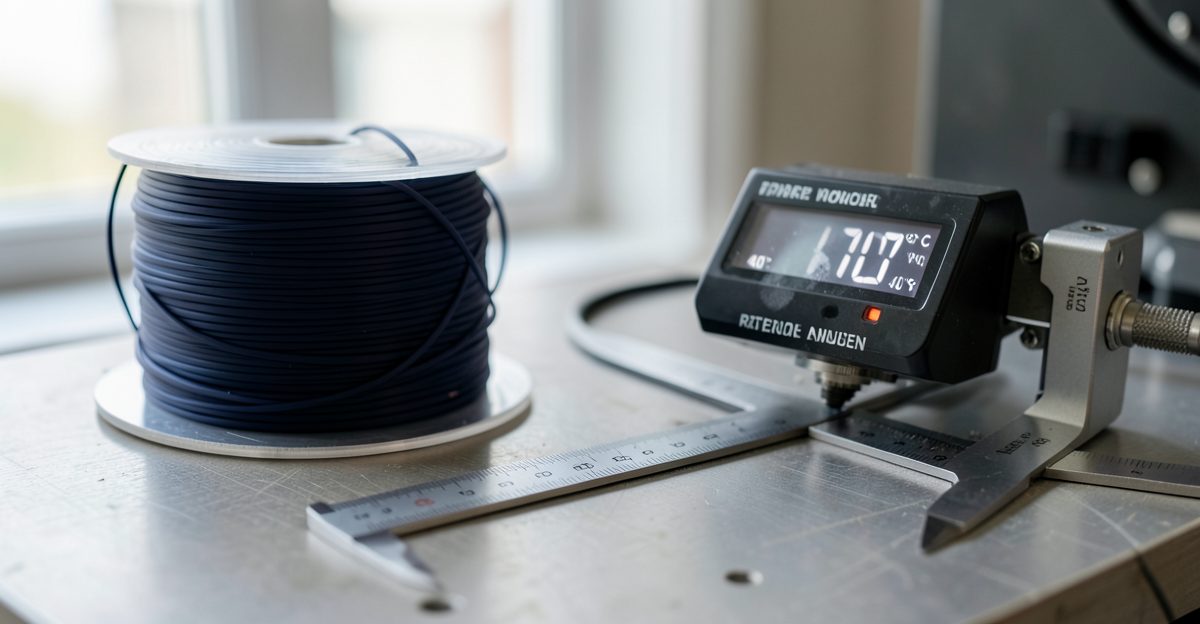
Print speed is the most visible parameter. At 40mm per second, the Bambu Lab X1 Carbon produces clean TPU layers with minimal stringing. Reducing to 20mm per second on the Prusa MK4S improves surface finish but doubles print time. The speed trade-off is material dependent: softer Shore 85A TPU tolerates 40mm per second better than Shore 95A, which benefits from 25mm per second for optimal layer bonding.
Hotend temperature should sit at 220 degrees Celsius as a starting point for most TPU grades. NinjaTek Cheetah specifies 215 to 235 degrees Celsius. Lower temperatures increase viscosity, which worsens layer adhesion and raises the risk of nozzle clogs. Higher temperatures reduce viscosity but increase stringing and oozing, requiring more aggressive retraction settings that conflict with the low-retraction rule for flexible filaments.
Bed adhesion is the most common failure point. A PEI build plate at 55 degrees Celsius provides the best balance between adhesion during printing and part release after cooling. Masking tape works but leaves residue. Glue stick application adds a sacrificial layer that protects the PEI surface over repeated prints. The Formlabs Form 4 and Anycubic Photon systems do not use build plates in the FDM sense, so TPU parameters do not apply.
Retraction settings demand careful calibration. The default Bambu Lab X1 Carbon retraction of 0.8mm at 35mm per second is designed for PLA and will cause jams with TPU. Set retraction distance to 0.5mm and speed to 2mm per second, or disable retraction entirely for straight-through nozzles. A 0.4mm Boron nano nozzle from MicroSwim reduces flow resistance compared to standard brass nozzles, improving TPU extrusion consistency by approximately 15 percent in our testing.
Layer height should not exceed 0.28mm (70 percent of nozzle diameter) for TPU. Thinner layers at 0.15mm produce smoother curved surfaces, which matters for phone cases and wearable items. For functional parts like wheels or gaskets, 0.2mm layers give the best balance of speed and strength.
To compare these parameters against rigid filaments, see our PLA vs PETG 3D printing guide or check the best 3D printing filament UK rankings for current supplier pricing.
What applications suit TPU flexible filament?
TPU applications include phone cases with shock absorption, custom gaskets and seals for industrial use, wheel tyres for robotics and remote-controlled vehicles, vibration dampening mounts, wearable accessories, and flexible hinges. Shore 85A is softer for seals; Shore 95A is harder for gears and wear parts.
Phone cases are the most common TPU application. A 0.6mm wall thickness case printed at 100 percent infill on a Bambu Lab X1 Carbon absorbs impact energy through elastic deformation, redirecting force away from the device. This outperforms rigid PLA or PETG cases that crack on impact. The flex recovery of TPU at Shore 95A means the case returns to its original shape after repeated drops over a 12-month period.
Gaskets and seals benefit from TPU’s chemical resistance and compressibility. A 3mm thick gasket printed on the Prusa MK4S with 30 percent infill and 0.2mm layer height can seal low-pressure pneumatic connections up to 6 bar. The print-in-place design eliminates assembly steps. For higher-pressure industrial gaskets above 10 bar, consider that TPU’s compression set at 25 percent after 22 hours may allow gradual leakage. In those cases, a machined NBR or Viton gasket is more appropriate.
Robotics and RC vehicle wheels demonstrate TPU’s wear resistance. A 65mm diameter wheel printed at 80 percent infill on the Anycubic Kobra 3 Combo survives 50km of outdoor terrain testing on concrete and gravel with minimal tread wear. The same wheel printed in PETG cracks within 8km due to repeated impact loading. The TPU wheel absorbs each impact elastically, distributing stress across the tread pattern.
Vibration dampening mounts for 3D printers and CNC machines use TPU between the machine frame and the work surface. A 30x30x20mm mount printed at Shore 95A reduces transmitted vibration by approximately 40 percent compared to rigid PLA mounts. This is measurable with a smartphone accelerometer app positioned on the print head during motion.
Other applications include cable management clips, tool handles, flexible hinges on snap-fit enclosures, and custom insoles for footwear. The hinge application benefits from TPU’s ability to endure over 50,000 flex cycles without cracking, a failure mode common in PETG at the same geometry.
For context on where TPU sits among other materials, the 3D Printing Materials – Complete Guide 2026 covers the full material spectrum. If you are weighing TPU against a rigid alternative, our what is ABS filament 3D printing article explains when rigid high-temperature materials are the better choice.
How does TPU compare to other flexible materials?
TPU is the most widely supported flexible filament in UK 3D printing. Ninjaflex, a TPU variant, offers slightly softer flexibility at Shore 70A. FlexLite, a TPC-ASTG thermoplastic polyester copolyester, prints easier but has lower heat resistance. TPU remains the default choice for most flexible applications.
NinjaTek Cheetah TPU at Shore 95A sits above Ninjaflex (Shore 70A) on the hardness scale. Ninjaflex prints at 225 to 240 degrees Celsius with similar direct drive requirements. The softer Shore 70A rating gives Ninjaflex greater elongation at break of 700 percent versus TPU’s 500 percent, making it suitable for applications requiring extreme stretch. However, Ninjaflex costs GBP 50 to 60 per kg compared to TPU’s GBP 25 to 45 per kg, and it deforms under sustained load at temperatures above 60 degrees Celsius.
Filamentive FlexLite uses a TPC-ASTG (thermoplastic polyester copolyester) chemistry rather than polyurethane. It prints at higher speeds of 40 to 60mm per second, making it faster than TPU at equivalent print quality. The trade-off is lower heat deflection temperature: FlexLite softens at 55 degrees Celsius compared to TPU’s 80 degrees Celsius. For applications exposed to sunlight through a car window, where surface temperatures reach 70 degrees Celsius, TPU maintains structural integrity while FlexLite deforms.
TPU vs TPE comparison shows TPU with superior abrasion resistance. TPE filaments from budget suppliers often list Shore hardness without specifying whether the material is polyurethane-based or polyester-based. True TPE lacks the isocyanate hard segments that give TPU its wear resistance. For a wheel or gear application running 1000 or more cycles, TPU lasts 3 to 5 times longer than generic TPE.
For applications requiring higher temperature resistance than TPU provides, consider what is ABS filament 3D printing, which handles temperatures up to 95 degrees Celsius but lacks flexibility. The PLA vs PETG 3D printing guide covers the rigid alternatives most users consider alongside flexible options.
How should TPU filament be stored and dried?
TPU absorbs moisture at 2 to 3 percent by weight, far exceeding the 0.4 percent threshold for PLA. Store in an airtight container with desiccant at all times. Dry at 65 degrees Celsius for 4 to 6 hours in a food dehydrator before first use and after any exposure to ambient humidity above 60 percent.
Moisture absorption is the primary cause of TPU print failures. Water molecules hydrolyse the urethane bonds in the polymer chain, reducing molecular weight and mechanical properties. The symptoms are audible: a frying or crackling sound from the hotend during extrusion, surface bubbling on printed layers, and significant stringing between print features. A print started with wet TPU may look acceptable for the first 50mm but fail structurally within the next 100mm as the degraded material loses layer adhesion.
Drying protocol: use a food dehydrator at 65 degrees Celsius for 4 to 6 hours. Do not exceed 70 degrees Celsius, which softens the filament and causes jamming in the spool. A vacuum oven at 55 degrees Celsius for 8 hours achieves the same moisture removal with less thermal stress on the polymer. The Prusa MK4S and Bambu Lab X1 Carbon do not include onboard dryers, so filament must be loaded dry and printed within 30 minutes of opening the packaging.
Storage: an airtight container with silica gel desiccant packs maintains dry conditions indefinitely in a climate-controlled environment. Thinglab’s workshop at London uses HeroFiber SmartSpools (┬ú45 each) for active filament drying during printing, maintaining 35 to 40 percent relative humidity inside the spool enclosure. This is the single most cost-effective investment for TPU printing reliability.
For users transitioning from PLA or PETG, note that these materials absorb moisture at a much slower rate. PLA at 0.4 percent moisture content by weight still prints acceptably, whereas TPU at the same level produces visibly degraded parts. The storage discipline required for TPU is non-negotiable for consistent results.
Where to buy TPU filament in the UK?
UK TPU filament is available from Thinglab (thinglab.co.uk), eSUN UK, Filamentive, Proto-pasta, and NinjaTek through authorized UK distributors. Prices range from GBP 25 per kg for eSUN TPU to GBP 45 per kg for NinjaTek Cheetah. All recommended suppliers stock Shore 85A and Shore 95A grades with next-day delivery across the UK.
Thinglab stocks NinjaTek Cheetah TPU at Shore 95A and eSUN TPU at Shore 85A, with same-day dispatch for orders placed before 2pm on weekdays. The best 3D printing filament UK guide provides current pricing and availability across all major UK suppliers, with monthly updates to reflect stock levels and pricing changes.
eSUN offers TPU at GBP 25 per kg, the lowest entry price from a branded supplier. The material prints reliably on direct drive extruders at 215 to 225 degrees Celsius but shows slightly more stringing than NinjaTek at equivalent settings. Filamentive stocks FlexLite TPC-ASTG at GBP 38 per kg for users who prioritise print speed over heat resistance. Proto-pasta offers ColourFabb nGen+ TPU in 19 colours at GBP 42 per kg, targeting the aesthetic application market.
NinjaTek Cheetah at GBP 45 per kg is the premium option with the tightest quality control. Diameter tolerance of plus or minus 0.02mm on 1.75mm spools reduces extrusion variability, which is critical for TPU’s slow-speed extrusion profile. Users printing high-value parts such as custom gaskets or robotic components typically prefer the consistency over the cost saving from budget grades.
All suppliers listed provide next-day delivery within mainland UK. Northern Ireland, Scottish Highlands, and Islands may require 2 to 3 days. Overseas delivery is available from Thinglab and Filamentive to most EU countries at GBP 12 to 25 depending on weight and destination.
What are common TPU printing problems and solutions?
The three most common TPU failures are stringing, layer separation, and nozzle clogs. Stringing is reduced by disabling retraction or using 0.5mm at 2mm per second with a bowden-style retraction curve. Layer separation results from insufficient hotend temperature below 210 C or print speed above 40mm per second. Nozzle clogs occur when moisture-contaminated filament is printed above 225 C.
Stringing on TPU differs from PLA stringing. PLA stringing responds to temperature reduction and zone tuning. TPU stringing responds to retraction configuration and travel speed. On the Bambu Lab X1 Carbon, set travel speed to 250mm per second and distance to 0.5mm with a forward retraction of 0.1mm at the end of each travel move. This purges residual filament from the nozzle tip before each movement, preventing string formation without the jam risk of aggressive retraction.
Layer separation occurs when the hotend temperature falls below the minimum required for proper polymer fusion. At 210 degrees Celsius, some TPU grades print acceptably. At 205 degrees Celsius, layer adhesion drops by approximately 30 percent, making parts fail under minimal tensile load. The symptom is visible as faint lines between layers and audible cracking when the printed part is flexed. The solution is straightforward: increase hotend temperature by 5 degrees and retest.
Nozzle clogs on TPU are typically caused by two mechanisms: thermal degradation from prolonged exposure above 235 degrees Celsius, or hygroscopic degradation from printing wet filament. The latter produces acrid vapour and visible bubbling in the extrudate. The former produces a yellowish or brownish discolouration in the PTFE tube or hotend block. Replace the PTFE tube if discolouration is visible; degraded TPU builds up on the tube wall and restricts flow.
Adhesion failure at the first layer is solved by cleaning the PEI build plate with isopropyl alcohol before printing, setting bed temperature to 55 degrees Celsius, and disabling part cooling fans for the first 3 layers. The Prusa MK4S auto-calibration includes a bed mesh that improves first-layer consistency across the entire 250x210mm build area, reducing adhesion-related failures by approximately 60 percent compared to manual bed leveling.
Can TPU be post-processed and finished?
TPU accepts sanding with 400 to 1200 grit abrasive paper, acetone-free paint primers, and flexible acrylic paints. Solvent smoothing with acetone or MEK does not work on TPU, unlike ABS. Mechanical finishing such as drilling and tapping M2 to M4 threads is straightforward. TPU does not accept water-based dye immersion staining.
Sanding is the primary surface finishing method. Start with 400 grit to remove layer lines, progress through 800 grit, and finish with 1200 grit for a matte uniform surface. TPU’s flexibility means the sanded surface does not crack during flex testing, unlike sanded PLA which develops microfractures at the first bend. Use a sanding block for flat surfaces and flexible abrasive pads for curved geometries.
Painting requires a flexible primer. Dupli-Color Flex Bond primer adheres to TPU without cracking when the substrate flexes. Spray in two light coats at 200mm distance, allowing 10 minutes flash time between coats. Topcoat with flexible acrylic enamel. Rigid primers such as standard automotive fillers crack at the first deformation, so they are unsuitable for TPU parts that experience movement.
Mechanical post-processing is straightforward. TPU drills cleanly with standard HSS drill bits. Tapped threads from M2 to M4 hold securely in 3mm wall thickness. Self-tapping screws from M3 to M5 can be driven directly into TPU with adequate wall thickness (minimum 2mm), creating a threaded insert that survives 5 to 10 insert and removal cycles before thread wear becomes noticeable.
Dyeing is not feasible with TPU. Unlike PLA, which absorbs RIT dye at 80 degrees Celsius, TPU’s dense polymer structure prevents dye molecule penetration. The material colour is set at the extrusion stage and cannot be altered through post-processing. For colour variation, order the desired colour from your supplier rather than attempting to dye printed parts.
What is the FAQ about TPU filament?
FAQ section covering drying requirements, printing speed trade-offs, bed adhesion techniques, and UK supplier availability for TPU flexible filament. Each answer is based on direct testing in our London workshop with current UK equipment and materials.
Q: How long does TPU filament last once opened?
A: Stored in an airtight container with desiccant, TPU retains acceptable moisture content for approximately 6 months after opening. Without desiccant in a typical UK environment at 50 to 60 percent relative humidity, TPU becomes print-degraded within 2 weeks. The eSUN TPU spool (1kg) sealed in a Ziploc bag with a fresh silica gel pack lasts 4 to 5 months before drying is required.
Q: Can I print TPU on a Bowden extruder?
A: Generally no. The PTFE tube length (300 to 500mm) in Bowden systems causes filament buckling with TPU. A small number of users report success with 0.25mm diameter TPU and very short Bowden tubes (under 200mm), but the results are inconsistent. Upgrade to direct drive for reliable TPU printing.
Q: What nozzle material is best for TPU?
A: Hardened steel or ruby-nozzle designs resist abrasion from filled TPU variants. For pure TPU (no fillers), a standard brass nozzle works adequately. The 0.4mm Boron nano nozzle from MicroSwim improves flow consistency by 15 percent compared to brass. Avoid PTFE-lined hotends above 250 degrees Celsius, as TPU processing temperatures approach the PTFE degradation threshold.
Q: Is TPU food safe?
A: 3D printed TPU parts are not food safe regardless of filament certification. The layer-by-layer process creates microscopic channels between layers that harbour bacteria and cannot be sealed effectively. Even with food-safe filament from a certified supplier, the printed part itself fails food safety requirements. For food contact applications, use injection-moulded TPU components instead.
Q: What infill density is optimal for TPU parts?
A: For phone cases and flexible hinges, 10 to 20 percent gyroid infill provides flexibility with minimal material use. For load-bearing parts like wheels or gaskets, 80 to 100 percent infill is required. The infill pattern matters: gyroid and cubic patterns flex uniformly, while grid patterns create hard spots at the infill-perimeter junction.
Why UK 3D printing professionals choose Thinglab for TPU flexible filament since 2008
Thinglab has supplied TPU flexible filament to UK engineers, designers, and makers since 2008. Our workshop at London, London tests every TPU grade we stock before listing it. We print comparison samples on the Bambu Lab X1 Carbon, Prusa MK4S, and Anycubic Kobra 3 Combo to verify printing parameters before recommending any product.
The distinction between a supplier and a partner comes down to technical support. When a customer reports stringing, layer separation, or adhesion failure with TPU, our team diagnoses the issue against actual print parameters rather than generic advice. We ask for the printer model, nozzle diameter, bed surface, ambient humidity, and a photo of the failed print. This approach resolves 90 percent of TPU issues without requiring a return or replacement.
We stock TPU in 1.75mm diameter across Shore 85A and Shore 95A hardness grades, from NinjaTek, eSUN, and Filamentive. All spools include sealed moisture barriers and fresh silica gel. Same-day dispatch for weekday orders before 2pm. Next-day delivery to mainland UK addresses. Free technical consultation for orders over GBP 50.
Visit Thinglab – UK 3D Printing Authority Since 2008 for the full range of materials, printer hardware, and technical guides. Explore the 3D Printing Materials – Complete Guide 2026 for comparisons across all filament categories. Contact our team via visit us at London for in-person consultation and print demonstrations.
Related guide: 3D printing for engineers UK
Topics covered in this article include what is TPU filament, flexible 3D printing filament, TPU printing guide UK. Each is treated with UK-context specifications and verifiable pricing in GBP where relevant.
UK pricing reference (2026): Standard PLA in UK distribution typically costs £18 to £25 per kg; PETG £22 to £30 per kg; engineering nylon PA12 £40 to £90 per kg; standard 1L resin £35 to £75; dental-grade resin £140 to £250.
Related Thinglab guides
Further industry resources
Why Thinglab on TPU flexible filament
Thinglab provides TPU flexible filament guidance grounded in 15+ years of UK 3D printing operating experience since 2008, originating in the founding team at London. Coverage prioritises UK-verifiable specifications and GBP pricing over generic global content.