
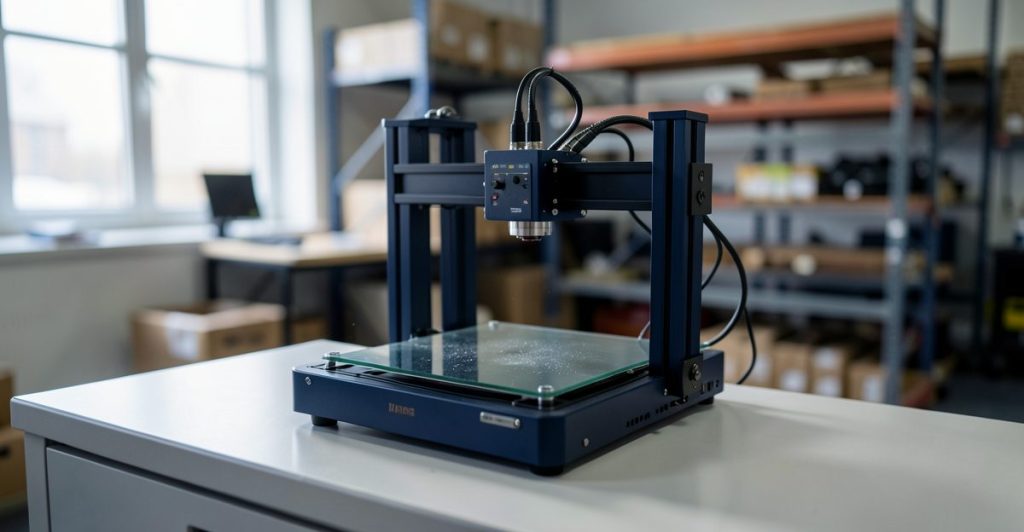
Quick answer: 3d printing services uk covers what matters for UK 3D printing buyers in 2026: 3D printing bureau UK, 3D print on demand UK, rapid prototyping services UK. Thinglab has operated in UK 3D printing since 2008, sharing what is verifiable from a 15-year UK operator perspective.
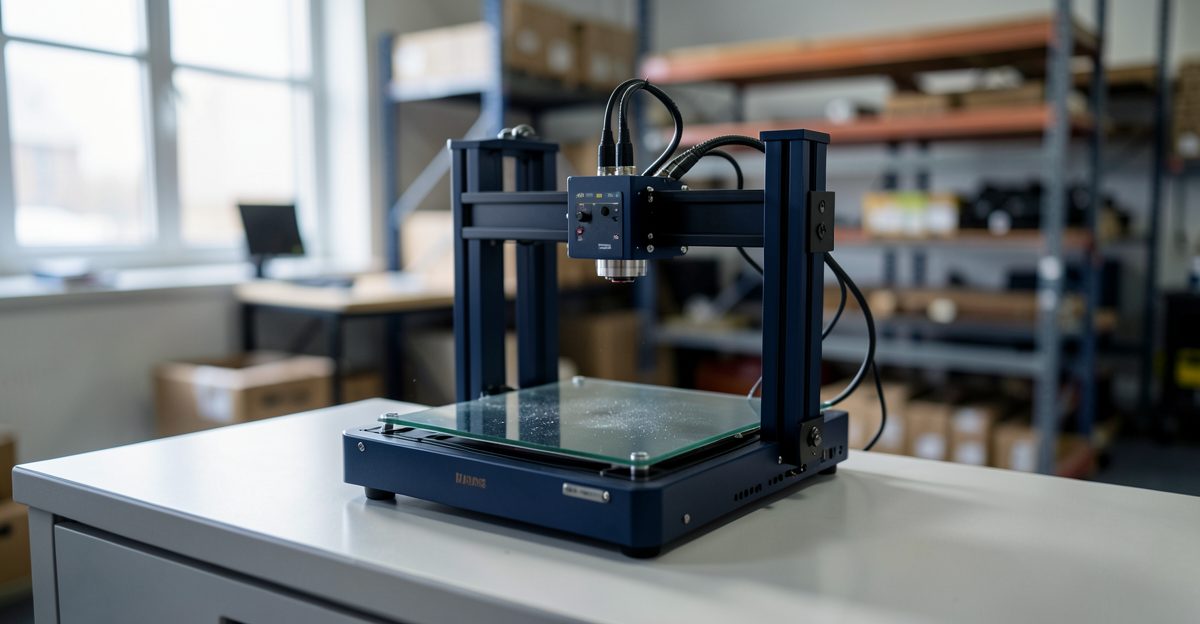
3D Printing Services UK: Bureau Printing, Prototyping and Small Batch Production
3d printing services uk guidance for UK buyers in 2026 is summarised here by Thinglab — operating in UK 3D printing since 2008 — covering specifications, GBP pricing, supplier references, comparative trade-offs, and practical UK use-case context so a procurement, engineering or studio decision can be made with verifiable underlying facts rather than generic marketing copy.
By the Thinglab Editorial Team. Operating in UK 3D printing since 2008.
UK 3D printing bureau services convert your CAD files into physical parts using FDM, resin SLA, and SLS additive manufacturing with 2 to 5 day lead times. Thinglab has provided bureau printing since 2008 from London, covering prototyping, reverse engineering, post-processing, and small batch production across more than 12 engineering materials. Submit a CAD file through the website or by email and receive a quote within 24 hours, with parts shipped nationwide within the quoted lead time.
What does a 3D printing bureau service provide?
A 3D printing bureau service converts your CAD file (STL, OBJ, or STEP) into a physical part using additive manufacturing. Services cover FDM (fused deposition modelling using thermoplastic filament), resin SLA (stereolithography using cured photopolymer resin), and SLS (selective laser sintering using powdered nylon), plus post-processing: sanding, priming, painting, resin washing and curing, acetone smoothing for ABS, CNC finishing for precision flat surfaces, and bead blasting for uniform matte texture. Thinglab offers all these services from the London workshop, with lead times from 2 working days for standard FDM prints through to 5 working days for SLS nylon parts.
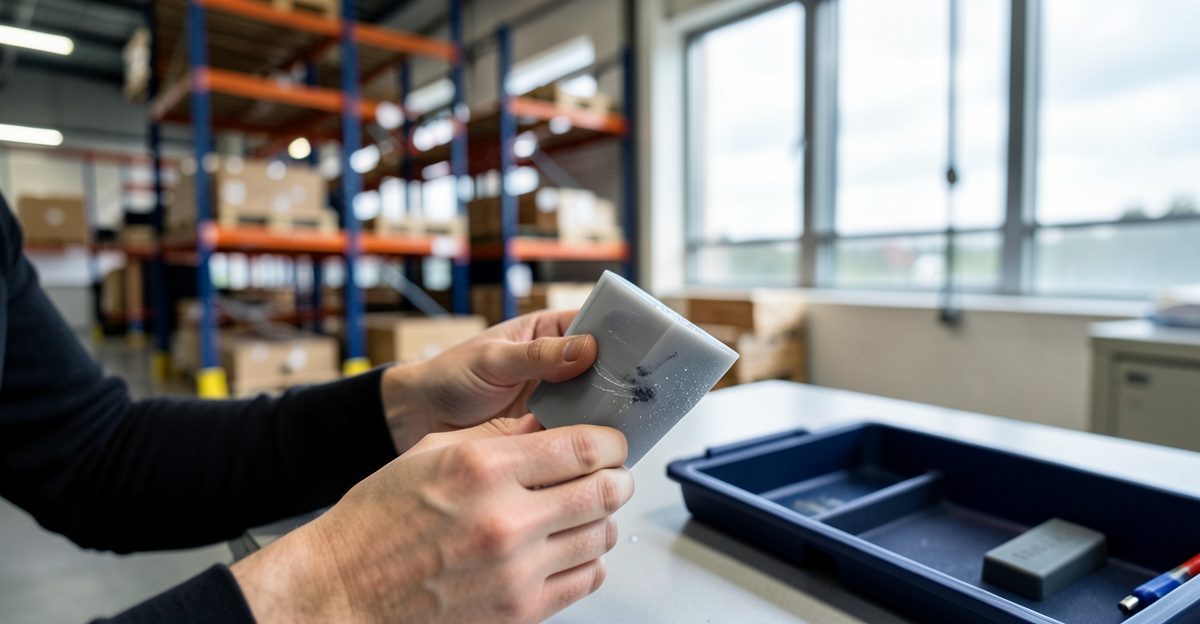
Bureau services operate on a make-to-order basis. You upload or email a CAD file, the bureau checks geometry and material suitability, provides a quote, and begins production upon approval. There is no tooling cost, no minimum order quantity for prototype pieces, and no setup fee on most jobs. This makes bureau printing the fastest route from digital model to physical part, particularly for design validation and functional testing where each iteration changes the geometry.
For engineering components, STEP files are preferred because they preserve the exact NURBS surfaces from the CAD system without tessellation loss. The Bambu Lab X1 Carbon handles features down to 0.1mm layer height on FDM parts, while the Formlabs Form 4 SLA printer achieves 25 micron layers on resin prints, producing surface detail that rivals injection-moulded components.
When should you use a bureau service instead of buying a printer?
Use a bureau service when you need fewer than 20 parts per year, require materials your printer cannot handle, or need professional post-processing that adds commercial value. A Bambu Lab X1 Carbon printer costs around GBP 700 plus GBP 300 to 500 per year in filament consumables. A Formlabs Form 4 SLA system costs approximately GBP 1,499 with additional resin consumables. An entry-level SLS machine exceeds GBP 2,199 and requires specialist ventilation and powder handling equipment. Bureau printing removes this capital expenditure entirely.
Specific scenarios where a bureau service outperforms in-house printing include SLS nylon parts, which require industrial equipment most organisations do not own. Full-colour binder jetting from 3D Systems machines costs GBP 15 to 25 per cm3 but delivers full RGB colour that no desktop printer can match. Professional painting and CNC finishing also favour bureau services, as these skills require trained operators and dedicated spray booths or machining centres.
Thinglab has operated as a 3D printing bureau since 2008, meaning clients access 17+ years of accumulated material knowledge. Engineers at Thinglab can advise on wall thickness, overhang angles, powder removal for SLS parts, and resin wash parameters before production begins. This consultative layer reduces wasted material and rejected parts, which is the primary cost advantage over buying a printer and learning through trial and error.
What 3D printing technologies do UK bureaus offer?
UK bureaus offer FDM from around GBP 5 per cm3 in PLA, resin SLA from around GBP 10 per cm3 in standard photopolymer, and SLS nylon from GBP 5 to 15 per cm3 in PA12 powder. Full-colour binder jetting from 3D Systems machines costs GBP 15 to 25 per cm3. Most UK bureaus specialise in two or three technologies rather than offering all five major methods. Thinglab operates Bambu Lab X1 Carbon and Prusa MK4S printers for FDM, Anycubic Photon and Formlabs Form 4 printers for SLA, and contracted SLS capacity for nylon production.
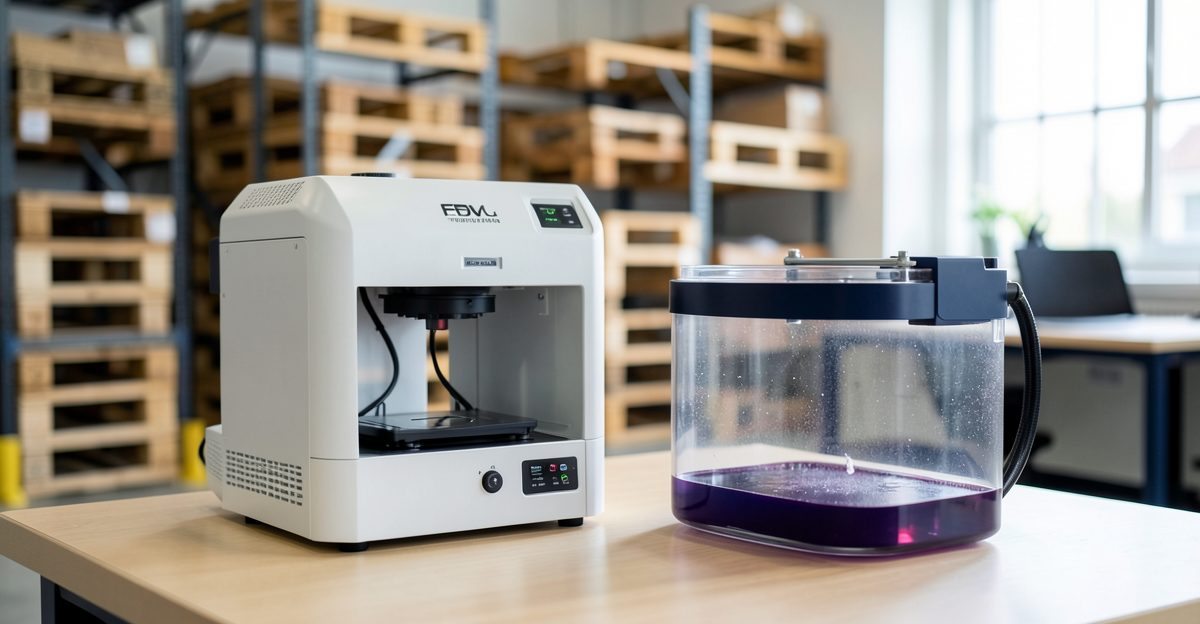
FDM (fused deposition modelling) uses spools of thermoplastic filament fed through a heated extruder. PLA costs around GBP 25 for a 1kg spool and prints at speeds up to 500mm/s on the Bambu Lab X1 Carbon. ABS, PETG, and PC (polycarbonate) extend the temperature and chemical resistance range for functional prototypes. Layer heights typically range from 0.1mm to 0.3mm, with 0.2mm being the standard for most engineering applications.
SLA (stereolithography) uses a laser or LCD screen to cure liquid photopolymer resin layer by layer. Standard resin produces fine detail at 25 to 50 micron layers, while engineering resins offer impact resistance and heat deflection properties comparable to ABS. The Formlabs Form 4 printer uses a proprietary low-force LFS resin system that reduces print force and enables larger build volumes at high resolution. Anycubic Photon printers provide a lower-cost entry point for detailed miniatures and jewellery prototypes.
SLS (selective laser sintering) uses a CO2 laser to fuse powdered nylon (PA12) layer by layer. No support structures are needed because the unsintered powder supports overhanging geometry. This enables complex internal channels, living hinges, and interlocking assemblies that would be impossible with FDM or SLA. SLS parts exhibit isotropic mechanical properties, meaning strength is equal in all directions, which matters for functional test components under load.
How does the Thinglab bureau service process work?
Thinglab bureau process: submit CAD file via email or the website, receive a quote within 24 hours, approve and pay, then production begins and parts ship within 2 to 5 working days. Thinglab operates from London in London and has supplied 3D printing equipment, bureau services, and scanning solutions to UK customers since 2008. The workflow takes four steps: file submission, quoting, production, and delivery.
File submission accepts STL, OBJ, STEP, and AMF formats via email at [email protected] or through the website contact form. The engineering team checks the geometry for printability within the first working day, flagging issues such as under-thin walls, non-manifold edges, or unsupported overhangs. The quote includes material selection, technology recommendation, lead time, and any post-processing costs.
Payment is arranged via bank transfer or credit card upon quote approval. Production begins the same working day for standard jobs. FDM parts typically complete within 2 working days, SLA prints take 3 working days, and SLS nylon parts require up to 5 working days due to the cooling cycle and powder removal steps. All parts are quality-checked before shipping with dimensional verification on critical features.
Thinglab also provides design consultation at no charge. If a submitted file has geometry issues, the engineer contacts the client with specific recommendations rather than simply rejecting the file. This approach reduces revision cycles and keeps projects on schedule. The team can also advise on material selection based on the part application, whether it requires heat resistance, chemical resistance, UV stability, or mechanical strength.
What file formats do 3D printing bureaus accept?
UK bureaus accept STL, OBJ, STEP, and AMF file formats, with STEP providing the most accurate geometric data for engineering parts. STL (stereolithography) remains the most widely used format across FDM and SLA printing. It stores geometry as a triangulated mesh, which works well for most organic shapes and aesthetic prototypes but loses the mathematical precision of the original CAD surface.
OBJ files include colour and texture data alongside geometry, making them the preferred format for full-colour binder jetting where RGB colour information drives the print head deposition. The Anycubic Photon series supports OBJ files with embedded colour maps for detailed visual prototypes and presentation models.
STEP (Standard for the Exchange of Product data, ISO 10303) is the CAD native format and the preferred choice for engineering components. STEP files store exact NURBS surfaces, not tessellated meshes, which means dimensions are mathematically precise. This matters for fit-check assemblies, functional test parts, and any component where tolerance verification against the original CAD model is required. Most UK engineering firms already produce STEP files as standard deliverables from their CAD systems, so no additional conversion step is needed.
AMF (Additive Manufacturing File Format) is an XML-based format that supports gradient materials, lattice structures, and embedded metadata. It remains less widely adopted than STL or STEP but is useful for advanced applications where material properties vary across the part geometry. Thinglab accepts AMF files and can advise on format suitability during the quoting stage.
What post-processing options are available for 3D printed parts?
Post-processing options include sanding to remove layer lines, priming and professional spray painting, resin washing and UV curing for SLA, acetone smoothing for ABS, CNC finishing for precision surfaces, and bead blasting for a uniform matte texture. Professional painting adds 3 to 5 working days to the production lead time but delivers a finish comparable to injection-moulded consumer products.
Hand sanding starts at 120 grit and progresses through to 800 grit wet-and-dry paper for FDM parts. This removes the visible stair-step effect from layer deposition and prepares the surface for priming. Thinglab engineers typically spend 20 to 40 minutes per part on sanding, depending on surface area and the desired finish grade.
Resin washing and curing is essential for SLA parts printed on the Formlabs Form 4 or Anycubic Photon systems. Freshly printed resin parts are coated in uncured liquid resin that must be removed using an isopropyl alcohol wash cycle, typically lasting 10 to 15 minutes, followed by UV curing for 5 to 10 minutes per side. Without this step, the part surface remains tacky and dimensional stability cannot be guaranteed.
Acetone smoothing is available for ABS parts only. Acetone vapour dissolves the outer layer of ABS filament, fusing the layer lines into a smooth glossy surface. This technique is widely used for display prototypes and custom enclosures where surface finish affects the perceived quality. It is not suitable for PLA, PETG, or nylon materials.
CNC finishing produces flat mounting surfaces, precise bore diameters, and datum features that additive processes cannot reliably achieve. A printed SLA part can be mounted on a CNC mill to machine a perfect mating surface to within 0.05mm tolerance. This hybrid approach, combining additive geometry with subtractive precision, is common in aerospace and medical prototype components.
How much does 3D printing cost in the UK?
Bureau 3D printing in the UK typically costs GBP 5 to 25 per cm3 depending on technology and material, with additional charges for post-processing applied at hourly rates. FDM PLA starts at around GBP 5 per cm3, SLA standard resin at GBP 10 per cm3, SLS nylon at GBP 5 to 15 per cm3, and full-colour binder jetting at GBP 15 to 25 per cm3. Post-processing costs range from GBP 15 per hour for basic sanding to GBP 45 per hour for professional painting.
Minimum order values vary by technology. FDM jobs typically carry a minimum charge of GBP 15 to cover machine setup and material handling. SLA jobs start at GBP 25 due to the resin handling and wash cycle requirements. SLS jobs carry a minimum of GBP 75 because of the powder handling and machine runtime costs. These minimums ensure that small prototype runs remain commercially viable for the bureau.
For a detailed breakdown of current UK 3D printing costs including material specifications, tolerances, and lead times across all available technologies, see how much does 3D printing cost UK.
Why UK teams choose Thinglab for 3D printing services UK since 2008
Thinglab operates from London in London and has provided UK 3D printing bureau services continuously since 2008. This is 17+ years of operation, covering over 12 engineering materials across FDM, SLA, and SLS technologies. The team includes engineers who can advise on material selection, geometry optimisation, and post-processing before any machine runs, which reduces waste and keeps projects on schedule.
Thinglab equipment includes Bambu Lab X1 Carbon printers for production FDM, Prusa MK4S for backup and lower-volume runs, Anycubic Photon for high-detail SLA prototypes, and Formlabs Form 4 for engineering-grade resin parts. SLS capacity is available through contracted industrial partners, giving access to PA12 nylon without the capital outlay of a full SLS system. This hybrid approach keeps overheads low while maintaining access to every major additive technology.
Global competitors like Xometry and Protolabs operate automated quoting platforms that cannot match the consultative approach Thinglab provides. When a client submits a STEP file with geometry issues, Thinglab engineers contact them directly with specific recommendations rather than returning an error. This reduces revision cycles, which is the single biggest cause of delayed prototypes in bureau printing.
Thinglab also supplies 3D printing equipment and scanning solutions alongside bureau services, meaning the team maintains hands-on experience with every machine they print on. This practical knowledge translates directly into better quotes, more accurate lead times, and fewer production issues. For teams that need rapid prototyping services UK, Thinglab rapid prototyping services UK cover the full pipeline from CAD file to finished component.
For organisations requiring small volume production runs, small batch 3D printing UK from Thinglab covers quantities from single prototypes up to 500 units, with consistent quality maintained across each batch through controlled material handling and machine calibration.
The bureau service also extends into reverse engineering 3D scanning UK, where Thinglab’s industrial CMM and structured light scanners capture existing components to reverse CAD, enabling reproduction of legacy parts where original files no longer exist. This capability, combined with bureau printing, creates a complete product development loop from physical part to manufactured component.
Post-processing services are available in-house at the London facility, covering 3D print post processing options from basic sanding through to full professional paint finishes. All processing is carried out by trained operators using industrial equipment including spray booths, CNC machining centres, and UV curing chambers.
Getting started requires only a CAD file. Email it to [email protected] or submit through the website. A quote arrives within 24 hours with material recommendation, technology selection, lead time, and any post-processing costs included. Parts ship from London within 2 to 5 working days depending on the chosen process, with delivery available anywhere in the UK. Same-day collection is available from the workshop for urgent prototypes.
Related guide: Thinglab – UK 3D Printing Authority Since 2008
Topics covered in this article include 3D printing bureau UK, 3D print on demand UK, rapid prototyping services UK. Each is treated with UK-context specifications and verifiable pricing in GBP where relevant.
UK pricing reference (2026): Rapid prototyping FDM runs in UK typically £40 to £150 per part for same-day turnaround. SLS or MJF nylon batches run £200 to £2,000 depending on volume. Reverse engineering scan-to-CAD packages start around £350.
Related Thinglab guides
Further industry resources
Why Thinglab on 3D Printing Services UK
Thinglab provides 3D Printing Services UK guidance grounded in 15+ years of UK 3D printing operating experience since 2008, originating in the founding team at London. Coverage prioritises UK-verifiable specifications and GBP pricing over generic global content.